

Looking for a baby name that feels elegant, timeless, and steeped in tradition? This list of 150+ Posh British names with royal meanings is packed with sophisticated options inspired by centuries of British aristocracy and royalty. From classic favorites to lesser-known gems, each name comes with its meaning and origin, making it easy to find one that feels just right for your little prince or princess.
British names have long been associated with grace, refinement, and royal heritage — and it’s easy to see why so many parents are drawn to them today. Whether you love the regal charm of Posh British names like Elizabeth and Alexander or want to discover a hidden gem with noble roots, this collection of posh British names offers something for every taste, along with the history behind each meaning.
Japanese Names That Mean Fire
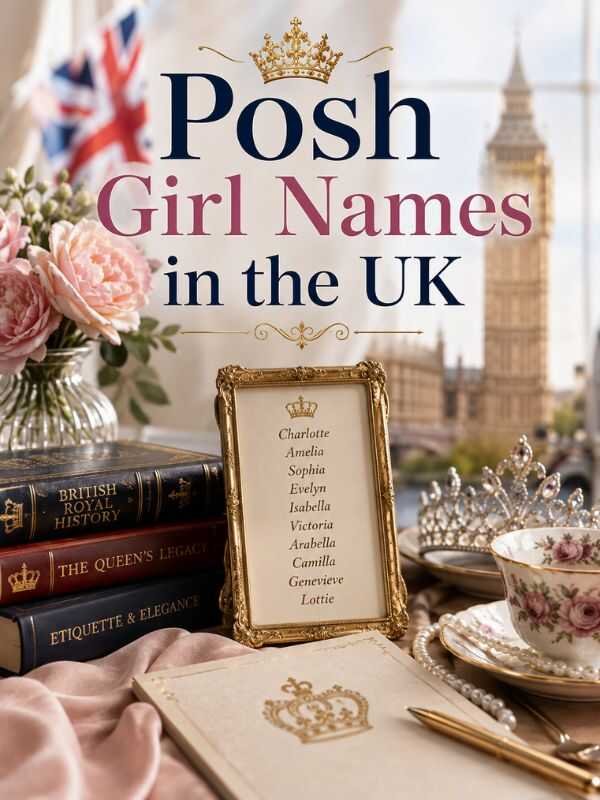
- Arabella – A romantic, aristocratic name meaning “yielding to prayer,” long favored by titled families.
- Cressida – Shakespearean and elegant, associated with old literary nobility.
- Ottoline – Rare and distinctive, made famous by socialite Lady Ottoline Morrell.
- Araminta – A quintessential upper-class name, softened as “Minty.”
- Pandora – Mythological yet fashionable among well-to-do English families.
- Verity – A virtue name popular in country-house circles.
- Cordelia – Shakespearean royalty, still used in aristocratic nurseries.
- Rosamund – Meaning “rose of the world,” historically royal.
- Genevieve – Elegant, French-influenced, common among the gentry.
- Clemency – A refined virtue name with old English roots.
- Tabitha – Classic, biblical, and enduringly upper-crust.
- Persephone – Grand and mythological, used by literary families.
- Honor (or Honoria) – A dignified virtue name tied to noble lineage.
- Camilla – Royal association through Queen Camilla.
- Beatrix – Literary and regal, tied to Beatrix Potter and royal titles.
- Marigold – A charming, floral name favored in country estates.
- Petronella – Old-fashioned and distinctly posh.
- Iolanthe – Operatic and rare, used by theatrical aristocracy.
- Rosalind – Shakespearean elegance with a country-house feel.
- Sybilla – Ancient and grand, echoing prophetic mythology.
Posh Boy Names in Britain
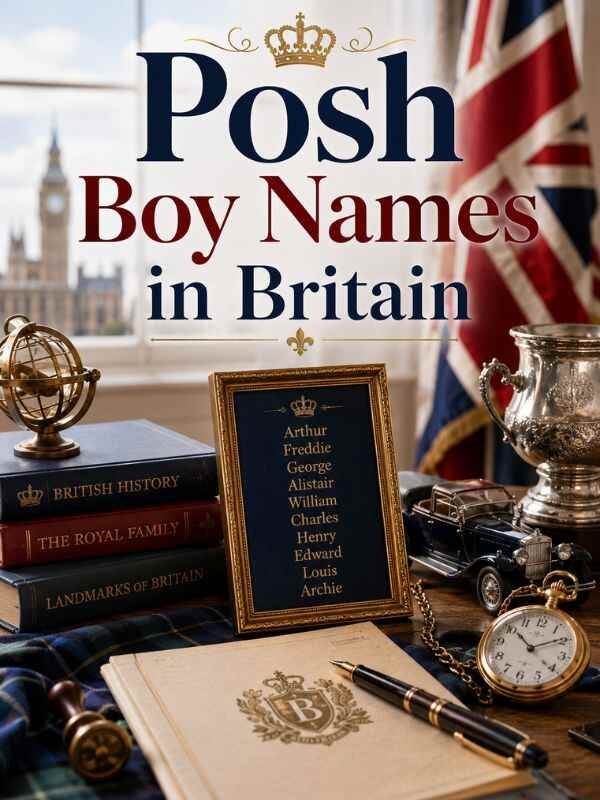
- Rupert – A staple of English aristocracy, associated with charm and privilege.
- Sebastian – Continental elegance, popular in prep schools.
- Tarquin – Roman-rooted and unmistakably upper-class.
- Hugo – Short, sharp, and favored in Home Counties families.
- Barnaby – Playful yet distinguished, often shortened to “Barney.”
- Crispin – Rare and refined, tied to old ecclesiastical roots.
- Peregrine – Falconry-inspired, historically aristocratic.
- Otto – Regal, European, and increasingly trendy among the well-heeled.
- Rafferty – Modern posh, popular in London’s affluent boroughs.
- Fenwick – Surname-turned-first-name with landed-gentry roots.
- Bertie – Royal nickname heritage (King George VI was “Bertie”).
- Casper – Soft and continental, favored by fashionable families.
- Monty – Short for Montgomery, military and aristocratic in tone.
- Ptolemy – Grand, classical, and unapologetically posh.
- Sholto – Scottish aristocratic name, rare and distinguished.
- Cosmo – Cosmopolitan and elegant, used across noble families.
- Ludovic – Formal and continental, often shortened to “Ludo.”
- Alaric – Historic and regal, tied to Gothic royalty.
- Inigo – Architectural association (Inigo Jones) lends prestige.
- Piers – Old English, associated with the landed classes.
Old-Fashioned Posh Boy Names
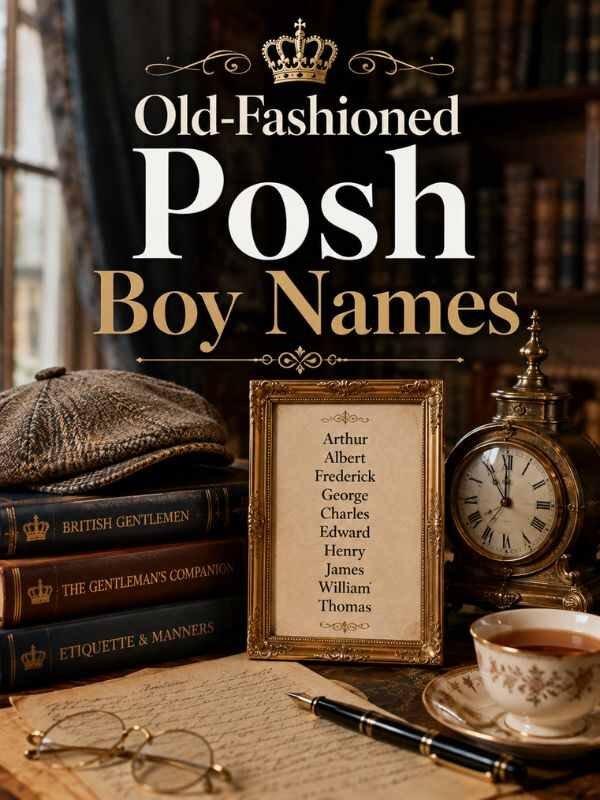
- Reginald – Formal Victorian-era name, shortened to “Reggie.”
- Bartholomew – Biblical and grand, shortened to “Bart” or “Barty.”
- Cuthbert – Distinctly old English, rarely used today but deeply posh.
- Aubrey – Historic English name once exclusively male.
- Percival – Arthurian legend, formal and noble.
- Wilfred – Edwardian-era favorite, revived among traditional families.
- Ambrose – Ecclesiastical roots, dignified and rare.
- Cecil – Tied to the Cecil family of British political nobility.
- Godfrey – Old Germanic-English name with knightly overtones.
- Lionel – Formal and chivalric, historically aristocratic.
- Mortimer – Medieval noble surname turned first name.
- Rowland – Chivalric and old-fashioned, echoing chansons de geste.
- Sylvester – Papal and classical, rarely used but distinguished.
- Theodore – Grand and classical, now softened to “Teddy.”
- Vincent – Old-fashioned yet timeless, tied to landed families.
Old Money British Names
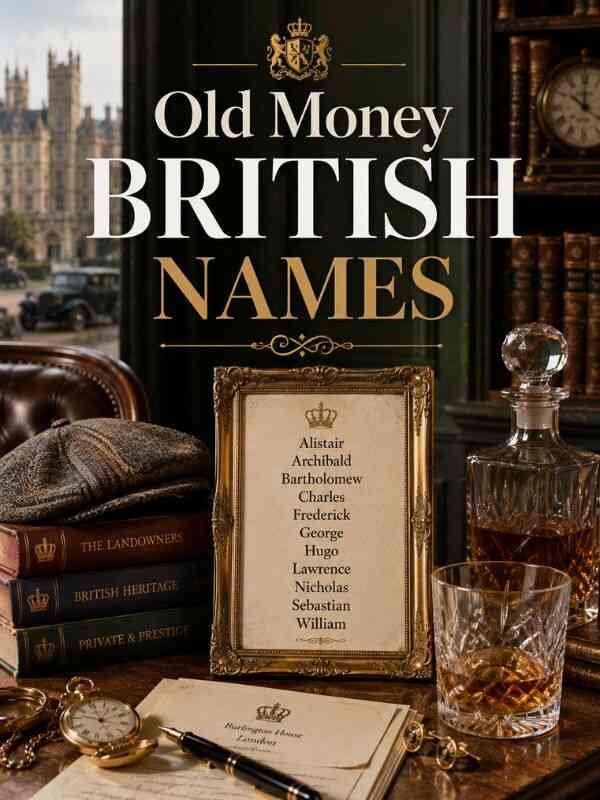
- Alistair – Understated, Scottish-aristocratic, never flashy.
- Camilla – Timeless, royal-adjacent, and never trend-driven.
- Edmund – Old English royal name, quietly regal.
- Diana – Classic, dignified, forever tied to nobility.
- Rupert – The archetypal old-money boy’s name.
- Venetia – Elegant and rare, tied to historic English families.
- Charles – Enduring royal name across centuries.
- Emma – Deceptively simple, long used by the English upper class.
- Frederick – Formal and dignified, softened to “Freddie.”
- Georgiana – Regency-era elegance, tied to the Cavendish family.
- Henry – A name that has never left royal or aristocratic circles.
- Isabella – Historic queenly name with old-money staying power.
- William – The definitive steady, understated old-money name.
- Eleanor – Regal, medieval, and consistently upper-class.
- Julian – Quietly refined, favored in traditional families.
Posh Surnames Used as First Names
- Blythe – Originally a surname, now a delicate first name.
- Fenwick – A landed-gentry surname adopted as a boy’s first name.
- Sinclair – Scottish noble surname, unisex in modern use.
- Harington – Aristocratic surname, occasionally used as a given name.
- Percy – Once solely a surname of the Dukes of Northumberland.
- Fitzgerald – Anglo-Irish noble surname repurposed as a first name.
- Beaumont – French-Norman surname denoting “beautiful hill.”
- Carew – Old Welsh-English gentry surname.
- Vane – Historic aristocratic surname, short and distinctive.
- Astor – Associated with the famous Astor family of British peerage.
- Cavendish – Surname of the Dukes of Devonshire, now a first name.
- Talbot – Old noble surname, medieval in origin.
- Sackville – Tied to Sackville-West aristocracy.
- Wentworth – A stately surname turned given name.
- Grosvenor – Surname of the Dukes of Westminster.
Popular Nicknames for Posh Female Names
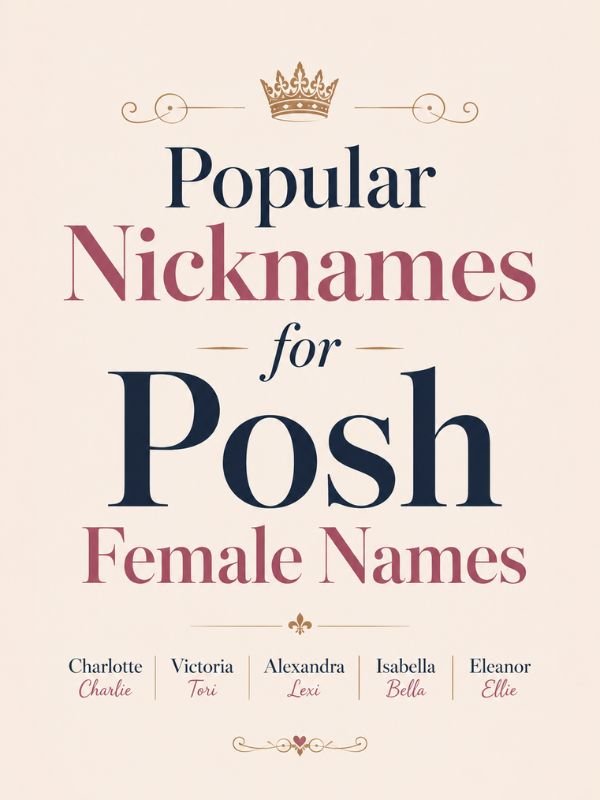
- Bella – from Arabella or Isabella
- Minty – from Araminta
- Trixie – from Beatrix
- Dora – from Pandora or Theodora
- Cressy – from Cressida
- Rosie – from Rosamund or Rosalind
- Tabby – from Tabitha
- Clemmie – from Clemency
- Percy – from Persephone
- Petra – from Petronella
- Sybil – from Sybilla
- Marge – from Marigold
- Genny – from Genevieve
- Cammy – from Camilla
- Ottie – from Ottoline
- Vera – from Verity
- Dilly – from Daphne or Delilah
- Flick – from Felicity
- Lolly – from Charlotte
- Immy – from Imogen
Structural Patterns in Posh Male Names
Posh British boys’ names tend to follow recognizable structural habits:
- Classical and Roman roots – Names like Tarquin, Ptolemy, and Alaric borrow directly from ancient history, signaling erudition and pedigree.
- Diminutive-friendly formality – Formal names (Montgomery, Bartholomew, Reginald) are chosen specifically because they shorten into affectionate nicknames (Monty, Bart, Reggie) used at home while the full name appears on official documents.
- Nature and falconry references – Posh British Names like Peregrine and Fenwick draw from countryside pursuits historically tied to landed estates.
- Surname transference – Family surnames (maternal or ancestral) are given as first names to preserve lineage, e.g., Fenwick, Sholto, or Blythe.
- Continental softness – Posh British Names like Casper, Otto, and Ludovic borrow European sounds, associated with old aristocratic intermarriage across Europe.
- Short, clipped, confident names – Hugo, Piers, and Bertie reflect a deliberate brevity that reads as understated confidence rather than showiness.
- Ecclesiastical and saintly roots – Crispin, Sebastian, and Bartholomew nod to religious and monastic naming traditions still respected in old families.
Full List with Origins and Aristocratic Signals
Posh British names carry stronger aristocratic signals than others, based on their origin and history. Arabella, Cressida, and Rupert trace back to long-standing English and Shakespearean traditions, while Cavendish and Percy are directly tied to specific ducal families. Peregrine and Fenwick reflect the countryside pursuits of landed estates, and Camilla carries a modern royal association through Queen Camilla.
The strongest aristocratic signals generally come from three sources: a documented royal or ducal connection, a Norman-French or Latin root signaling post-Conquest nobility, and prior use as a surname before it became a first name.
How to Test a Posh Name Before You Commit
Before settling on a name, it helps to say it aloud in full to see how it sounds in formal, everyday conversation. It’s also worth checking the nickname it naturally produces, since an awkward shortened form can be a sign the full name won’t sit comfortably in daily life.
Pairing the first name with the surname is another useful test, as is imagining how it will look on official documents like a passport or diploma. Finally, consider the playground test — a name that’s distinctive but still easy to say tends to age better than one that’s simply difficult.
Tips for Making the Name Memorable
A name becomes memorable when it has a clear, singular pronunciation and a story behind it, whether that’s a family connection, a literary figure, or a meaningful place. Balancing rarity with familiarity also helps — a name that’s unusual but not unpronounceable tends to stand out for the right reasons.
Rhythm plays a role too, since Posh British names with a strong first-syllable stress, like Tarquin or Araminta, are often easier to recall. A charming nickname, such as Bertie or Trixie, can also become the memorable detail people naturally associate with a person.
Building an Identity Around Your Chosen Name
A name is only the starting point of identity — how it’s worn day to day matters just as much as the name itself. Using it consistently across school, work, and social settings helps build a coherent sense of self, while family narrative and shared naming traditions can turn a Posh British names into a living connection to past generations.
Ultimately, a strong name allows room for both a formal public persona and a warmer private nickname, without either one feeling disconnected from the other.
Tips for Selecting the Perfect Posh Name
A good starting point is family history — looking at maternal and paternal surnames or grandparents’ Posh British names often turns up meaningful, authentic options. It also helps to balance formality with usability, since a name that looks elegant on paper but is awkward to say daily can become frustrating over time.
Consider how the name will suit a person at every stage of life, from nursery to boardroom, and check how it’s pronounced internationally if it may be used globally. Above all, timeless names tend to age better than trend-driven ones, so it’s worth testing the full name in real scenarios, like a wedding invitation or a CV, before finalizing it.
Why Do Upper-Class Families Reuse Posh British Surnames?
Upper-class families have long turned surnames into first Posh British names as a way of preserving a family line, particularly when there’s a risk of a name disappearing due to daughters marrying out or a lack of male heirs. A recognizable surname like Cavendish or Fitzgerald instantly signals pedigree and connects the bearer to a documented family history.
This practice also keeps ties to specific estates, dukedoms, or land holdings visible, and often honors maternal family lines when they carry more historical weight than the paternal side. As inheritance laws and family structures have shifted over the centuries, using surnames as first names has remained a flexible way to keep ancestral identity alive.
Frequently Asked Questions About Posh British Names
What are posh British names?
Posh British names are elegant, traditional names linked to British royalty, nobility, and upper-class families. They are known for their timeless style and rich history.
What are the most popular posh British names?
Popular choices include Charlotte, Elizabeth, Victoria, George, William, Arthur, Henry, and Edward. These Posh British names remain classics across generations.
What is the poshest British boy name?
George is often considered the poshest British boy name because of its strong royal heritage. Other classic options include William and Arthur.
What is the poshest British girl name?
Charlotte is one of the poshest British girl names. Other elegant favorites are Elizabeth, Victoria, and Catherine.
What are old money British names?
Old money British names are classic names passed down through wealthy and aristocratic families, such as Edward, Charles, Eleanor, and Margaret.
Are posh British surnames used as first names?
Yes. Surnames like Spencer, Sinclair, Montgomery, and Fairfax are often used as stylish first Posh British names in Britain.
What makes a British name sound upper class?
Upper-class British names are usually traditional, easy to recognize, and have royal, noble, or historical connections.
Are royal names always considered posh?
Most royal names are considered posh because of their royal history, but many are also popular with everyday families.
Conclusion
Choosing a posh British name for your little one is more than just picking something that sounds elegant—it’s about connecting them to centuries of royal tradition, aristocratic charm, and timeless sophistication. Whether you’re drawn to a name once worn by a queen, a duke, or a beloved royal heir, each option on this list carries its own sense of prestige and history. From classic favorites to lesser-known gems, these 150+ Posh British names offer something for every parent seeking a touch of regal elegance for their child.
At the end of the day, a name is a gift that stays with your child for life, and there’s something truly special about giving them a name steeped in royal heritage and refined grace. We hope this list has inspired you to find the perfect posh, British-rooted name that feels both meaningful and majestic. Whichever name you choose, may it carry forward the elegance and legacy of the British crown for generations to come.
