

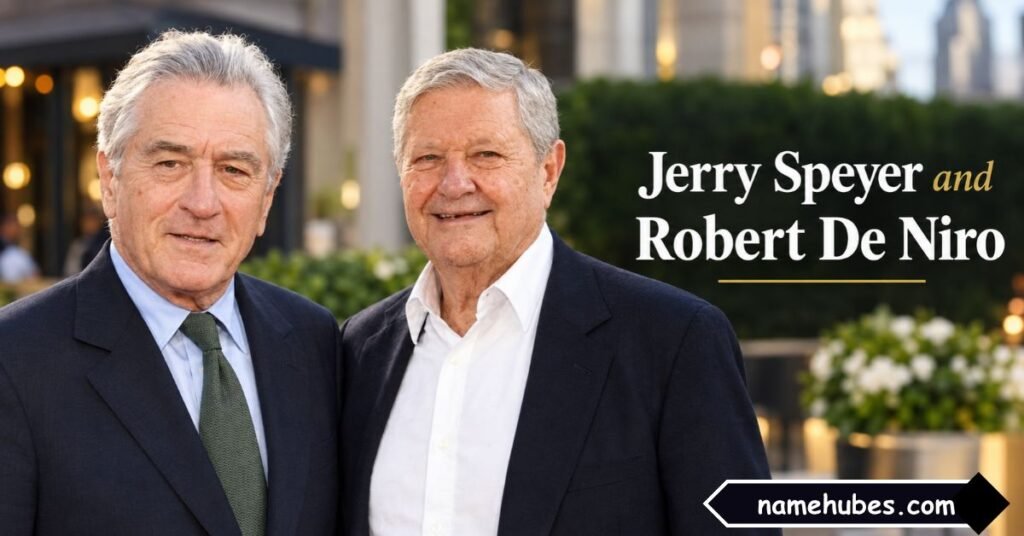
Do these two New York giants actually know each other?
Search results pair them all the time.
Plenty of readers assume a business deal or a decades-long friendship.
The record tells a different story.
Jerry Speyer and Robert De Niro each shaped New York City after the September 11 terrorist attacks, but they worked in separate worlds.
Speyer built towers as a founding partner of Tishman Speyer.
De Niro co-founded the Tribeca Festival and helped revive Lower Manhattan.
No documented personal relationship or business partnership links them.
This guide covers their careers, their New York legacy, and why their names keep landing in the same search.
Who Is Jerry Speyer?
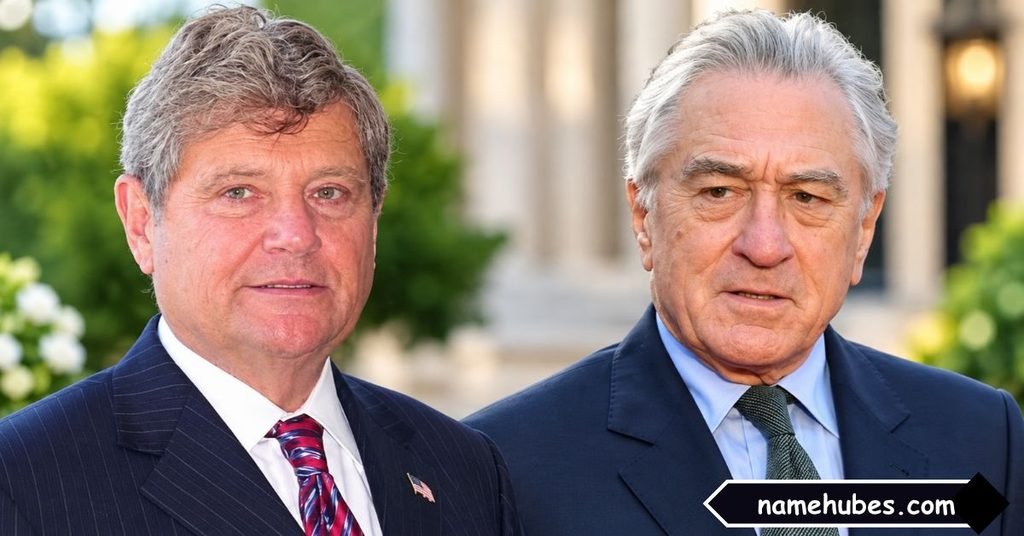
Jerry I. Speyer is an American real estate developer.
He was born on June 23, 1940, in Milwaukee, Wisconsin.
That makes him 85 or 86 years old in 2026.
He is a founding partner of Tishman Speyer, a global firm behind some of Manhattan’s best-known buildings.
Think of the skyline, not the spotlight.
Speyer built his reputation through deals and board seats rather than red carpets.
Most New Yorkers know his buildings long before they know his face.
Jerry Speyer’s Education and Early Career
Speyer studied at Columbia University.
He graduated from Columbia College in 1962.
Two years later he earned an MBA from Columbia Business School.
His first job came with a famous address.
He worked as an assistant to the Vice President of Madison Square Garden, the arena that anchors Midtown Manhattan’s sports and concert scene.
That role gave him an early look at how big New York institutions run.
Soon after, he moved into real estate development full time.
His path began with a business degree and an assistant’s desk.
Tishman Speyer and His Real Estate Career
In 1978, Speyer co-founded Tishman Speyer with his father-in-law, Robert Tishman.
Tishman carried a respected name in New York real estate.
Under Speyer’s leadership, the firm grew into one of the world’s largest developers of commercial real estate.
Here are the landmark properties tied to Tishman Speyer’s portfolio today:
- Rockefeller Center: the sprawling Midtown Manhattan complex of towers, plazas, and studios.
- The Chrysler Building: the Art Deco skyscraper known for its stainless steel crown.
- The MetLife Building: the massive office tower that sits behind Grand Central Terminal.
- Hearst Tower: the glass-and-steel headquarters of Hearst Communications on Eighth Avenue.
Leadership changed hands inside the family in 2015.
His son, Rob Speyer, became sole CEO of Tishman Speyer that year.
Jerry stayed on as Chairman and kept an active hand in the business.
Jerry Speyer’s Influence on New York City
Speyer’s reach goes well past the buildings.
Commercial real estate development gave him capital and visibility.
Civic involvement gave him a seat in rooms where the city’s biggest decisions get made.
Together, those two tracks built a New York legacy that few developers match.
His Role in Rockefeller Center
Rockefeller Center is the deal that defines Speyer’s career.
It started with a relationship.
Speyer cultivated a bond with David Rockefeller, the banking heir whose family built the complex, back when Speyer was still a young man.
That connection eventually opened the door to a much bigger table.
The Rockefeller Center acquisition in 1995 unfolded in four steps:
- Speyer built trust with David Rockefeller over many years.
- The property landed in bankruptcy.
- Speyer joined a consortium that moved to buy it.
- The group won the bidding at $1.2 billion, beating real estate investor Sam Zell.
Zell was a well-known Chicago investor, so beating him mattered.
The win cemented Tishman Speyer’s place among the most influential firms in the city.
It also handed Speyer a trophy property that still anchors his name today.
Major Real Estate and Civic Contributions
Speyer never limited himself to one lane.
He took on leadership roles at institutions that touch everyday New York life.
His civic résumé includes:
- Chairman of the Museum of Modern Art: the Midtown museum known for its modern and contemporary art collection.
- Vice Chair of New York-Presbyterian Hospital: one of the largest hospital systems in the city.
- Former Chairman of the Federal Reserve Bank of New York: the regional bank that carries out much of the Federal Reserve’s work in markets.
- Chairman Emeritus of Columbia University: an honorary title at the school where he earned both degrees.
Notice the pattern.
Art, health care, finance, and education all show up on one list.
That spread shows how deeply he invested in the city’s institutions, not just its skyline.
Who Is Robert De Niro?
Robert De Niro is an American actor, producer, and director.
He was born on August 17, 1943, which makes him 83 in 2026.
Critics often rank him among the most influential performers in film history.
His story runs past the screen too.
He also helped reshape the culture and economy of Lower Manhattan.
Robert De Niro’s Acting Career and Achievements
De Niro grew up in New York City and trained under acting teacher Stella Adler.
His breakout came through gritty street dramas set in his hometown.
Over five decades, he built a body of work that film schools still teach.
A few roles define Robert De Niro’s acting career:
- The Godfather Part II: the role of young Vito Corleone earned him an Oscar for Best Supporting Actor.
- Taxi Driver: his unsettling turn as Travis Bickle became a film industry touchstone.
- Raging Bull: he won Best Actor for playing boxer Jake LaMotta.
- Goodfellas and Casino: two crime epics that deepened his long partnership with director Martin Scorsese.
He stepped behind the camera as well.
He directed A Bronx Tale, a story rooted in the neighborhoods he knew as a kid.
In 2016, he received the Presidential Medal of Freedom.
His Connection to Tribeca and New York City
De Niro’s tie to Tribeca runs deeper than a film festival.
Tribeca, short for Triangle Below Canal Street, is a Lower Manhattan neighborhood that once housed warehouses and small factories.
De Niro put down business roots there early.
He opened Tribeca Grill and Nobu with restaurateur Drew Nieporent.
Tribeca Grill became a neighborhood anchor.
Nobu, the Japanese restaurant brand, brought a global dining crowd to the area.
Those Tribeca restaurant ventures helped make the neighborhood a cultural and culinary destination well before his festival work began.
What Is the Connection Between Jerry Speyer and Robert De Niro?
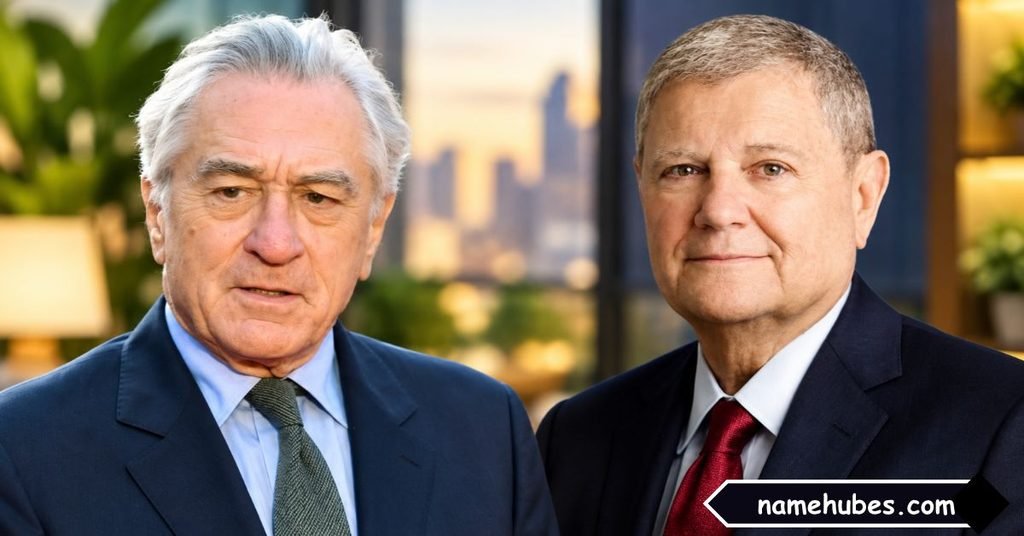
Here’s the straight answer.
No documented personal relationship exists between them.
No documented business partnership exists either.
No record of direct collaboration turns up in public sources.
So why do people link them?
The connection is civic and symbolic.
Both men made independent contributions to New York City’s recovery and growth after September 11.
One used commercial real estate development.
The other used film and cultural revitalization.
Different careers, shared city.
Are They Friends, Business Partners, or Professional Associates?
Nothing public supports any of those labels.
No deal, joint board seat, or shared project connects Speyer and De Niro.
Both men move through the city’s high-profile circles, but sharing a city doesn’t make a relationship.
Think of two bridges in the same harbor.
Both carry New Yorkers across, yet nobody built them together.
This side-by-side table shows how different their paths look:
| Category | Jerry Speyer | Robert De Niro |
| Date of birth | June 23, 1940 | August 17, 1943 |
| Primary industry | Commercial real estate | Film, acting, production |
| Known for | Tishman Speyer, Rockefeller Center | Acting career, Tribeca Festival co-founder |
| Education | Columbia University (BA, MBA) | No college degree listed |
| Civic role | MoMA Chairman, NY-Presbyterian Vice Chair | Tribeca Festival co-founder |
| Documented connection | Not supported by any source | Not supported by any source |
Jerry Speyer, Rob Speyer, and the Search Query Confusion
Part of the confusion comes from the Speyer name itself.
Rob Speyer is Jerry’s son and the sole CEO of Tishman Speyer since 2015.
People who search for “Speyer” may land on either man, and the results blur together.
Several likely reasons explain why the pairing keeps appearing:
- Both men became symbols of New York City’s post-9/11 recovery.
- Tishman Speyer’s Rockefeller Center and De Niro’s Tribeca both shape Manhattan’s image.
- Search engines group famous New Yorkers who share topics like real estate, culture, and civic life.
- Father and son sharing a surname can scramble what people type into the search bar.
None of those reasons point to a real partnership.
They point to a search habit.
Robert De Niro and the Tribeca Festival
The Tribeca Festival is De Niro’s biggest gift to his adopted neighborhood.
He co-founded it in 2002 with producer Jane Rosenthal.
Tribeca Festival founding in 2002 came barely a year after the attacks, and the timing was no accident.
Why De Niro Co-Founded the Festival
De Niro and Rosenthal launched the festival in direct response to the September 11 terrorist attacks.
Lower Manhattan was hurting.
Streets were quiet and businesses were struggling.
At the inaugural festival outside City Hall, De Niro explained the goal.
He wanted to celebrate filmmaking while helping revitalize a neighborhood the attacks had devastated.
That mission turned a film event into a piece of September 11 recovery.
The Festival’s Cultural Impact on New York
The festival has outgrown its original purpose.
It now ranks among the most respected film festivals in the world.
Here’s what the numbers show:
- More than 1,200 films have screened.
- Those films came from 80 countries.
- The festival has brought in an estimated $725 million in economic activity.
- It has reached 25 years of operation.
Those figures matter beyond bragging rights.
Visitors fill hotels and restaurants, and filmmakers find a stage in the neighborhood that De Niro helped revive.
The festival proves that culture can rebuild a place as surely as concrete can.
| Also Read This Celebs |
| Stephanie Maloney Katz: What to Know About Dan Katz’s Wife |
| Peter Orszags Hair: Is His Hairline Naturally Receding? |
| Dee Dee Gatton Biography: Age, Height, and Personal Life |
How Jerry Speyer and Robert De Niro Have Influenced New York
Together, the two men form complementary pillars of New York City’s identity.
Speyer shaped the skyline and the institutional backbone.
De Niro shaped the cultural voice and creative energy.
Both stayed loyal to the city.
Neither chased bigger stages elsewhere.
They reinvested their influence in New York’s cultural and economic growth, especially during the years after 9/11.
They never teamed up, yet their work often landed on the same blocks of Manhattan.
Frequently Asked Questions About Jerry Speyer and Robert De Niro
How Are Jerry Speyer and Robert De Niro Connected?
No direct personal or business connection is documented.
Both men are prominent figures in New York City’s post-9/11 story.
Speyer worked through real estate and institutions, while De Niro worked through film and the Tribeca Festival.
Who Is Robert De Niro’s Best Friend?
De Niro hasn’t publicly named one official best friend.
Fans most often point to director Martin Scorsese, who guided him through classics like Taxi Driver and Goodfellas.
Actors like Joe Pesci and Harvey Keitel also appear alongside him across many films.
Treat “best friend” as a fan label rather than a confirmed title.
What Is Jerry Speyer’s Religion?
Public profiles widely describe Jerry Speyer as Jewish.
He doesn’t make his faith a public talking point.
No source connects his religion to Robert De Niro or to the search pairing.
What Controversies Has Robert De Niro Been Involved In?
De Niro has drawn headlines in three main areas.
- Politics: He has criticized Donald Trump sharply in speeches and interviews.
- The Vaxxed film: In 2016, he first defended and then pulled the anti-vaccination documentary Vaxxed from the Tribeca lineup after heavy backlash.
- A court case: A jury found his company, Canal Productions, engaged in gender discrimination and retaliation against a former assistant, Graham Chase Robinson.
Reports on the trial note that De Niro was not personally found liable for the abuse claims.
Conclusion
Jerry Speyer and Robert De Niro shaped New York City in very different ways.
Speyer co-founded Tishman Speyer, joined the 1995 Rockefeller Center purchase, and held top civic posts.
De Niro became an acclaimed actor, opened Tribeca restaurants, and co-founded the Tribeca Festival.
One built towers, the other built a festival.
No documented personal relationship or business partnership links them.
Searches pair them because both helped lift the city after September 11.
Rob Speyer’s surname adds to the mix-up.
Their link is shared civic influence, not friendship.
The two never worked together, yet both left lasting marks on Lower Manhattan and beyond.
