


Bob Chapek and John Paulson reached the top of business through very different doors. Chapek spent nearly three decades inside The Walt Disney Company before becoming its CEO in February 2020. Paulson started his own investment firm in 1994 and later made one of the most profitable trades in market history. Both men enjoyed major public success. Both also faced hard setbacks later.
Each story carries a clear lesson about trust. This comparison covers their careers, their money, their leadership roles, and the pressures that came with them. It also answers common questions, including whether the two ever worked together and why their names so often appear side by side.
Bob Chapek and John Paulson: Career and Business Comparison

Putting these two careers side by side shows how many routes lead to influence in business. Chapek climbed through one global entertainment company. Paulson built an investment firm from the ground up. One man oversaw a workforce of well over 100,000 people. The other directed a small team that moved enormous sums of capital.
The endings differed too. Chapek’s time as Disney CEO lasted less than three years and closed with a board decision. Paulson’s biggest win came in 2007. Later losses then pushed many outside investors out the door. Chapek is best remembered for steering Disney through the pandemic and for the abrupt end of his tenure. Paulson is best remembered for a housing-market bet that analysts and authors have called one of the greatest trades ever.
| Area | Bob Chapek | John Paulson |
| Career base | The Walt Disney Company | Paulson & Co. |
| Role | Corporate executive and Disney CEO | Hedge fund founder |
| Key dates | Joined in 1993; CEO from February 2020 to November 2022 | Founded firm in 1994; major trade in 2006 to 2007 |
| Defining achievement | Led Disney through the COVID-19 pandemic and streaming expansion | Profited from the housing market bubble |
| Main setback | Lost board confidence | Fund losses and investor withdrawals after 2010 |
| Measure of success | Revenue, profit, subscribers, brand health | Investment returns and assets under management |
Bob Chapek’s Career at Disney
Who Is Bob Chapek?
Bob Chapek is an American business executive who served as CEO of The Walt Disney Company from February 2020 to November 2022. Before that, he spent more than two decades climbing the company’s ranks.
He joined Disney in 1993 in home entertainment marketing. The job lacked glamour. Still, it taught him how to sell products to families, which sits at the heart of Disney’s business. He later moved through home entertainment leadership and consumer products. Colleagues came to know him as a numbers-minded manager who liked pricing, process, and detail.
His bigger operating jobs followed. In 2015, Chapek took charge of Disney Parks and Resorts. A 2018 reorganization then placed him at the head of Disney Parks, Experiences and Products, a unit covering theme parks, resorts, cruise ships, and consumer goods. That division produced a large share of the company’s profit, so the post carried real weight.
In February 2020, the board named Chapek CEO to succeed Bob Iger. The timing could hardly have been worse. Within weeks, the COVID-19 pandemic shut down Disney’s parks and delayed film releases. Revenue from the business he knew best fell sharply. He also had to guide a major shift toward streaming, since Disney+ had launched only a few months earlier.
His record includes real wins. Disney+ passed 100 million subscribers during his tenure. The parks reopened and recovered. He introduced paid line-skipping services such as Genie+ and Lightning Lane, which lifted park revenue. He also centralized decisions about where and how Disney content would reach audiences. Supporters credit him with keeping a giant company stable through a historic crisis.
Why Did Disney Replace Bob Chapek?
Disney’s board replaced Chapek in November 2022 and brought back Bob Iger as CEO. The move stunned many observers. Only months earlier, the board had extended Chapek’s contract.
The board gave no single public reason. Reports and commentary pointed to several problems that built up over time:
- Creative tension. The restructuring gave Chapek’s team more control over how content was released. Many creative leaders felt sidelined.
- Talent disputes. Scarlett Johansson sued Disney in 2021 over the release of Black Widow on Disney+ and in theaters at the same time. The case settled that fall but hurt the company’s standing with performers.
- Public communication. Chapek drew criticism for how slowly he responded to a Florida education law that many employees opposed. He later apologized and paused political donations in the state.
- Streaming costs. Investors worried about how much money Disney+ was losing. The last quarterly report before his exit showed a streaming loss of more than a billion dollars.
Each issue alone was manageable. Together, they wore down board confidence. Disney’s stock also fell sharply through 2022, which added pressure.
Iger returned on a two-year contract with a mandate to stabilize the company and plan for succession. The result shows how fast a CEO’s position can change once trust slips. A chief executive answers to a board and shareholders, not just customers. Chapek’s story also proves that operating skill alone isn’t enough. Clear communication with creative partners, employees, and investors counts just as much.
| Discover More Celebrities You May Also Like |
| Palmer Luckey and Jeff Greene: Careers, Wealth, and Success |
| Hans Vestberg and Mario Gabelli: Careers and Achievements |
| Richard Peery and John Paulson: Careers and Net Worth |
John Paulson’s Investment Career and Financial Success
Who Is John Paulson?
John Paulson is an American billionaire investor and the founder of Paulson & Co., an investment firm based in New York. He was born in Queens in 1955 and studied at New York University. He later earned an MBA from Harvard Business School. After graduating, he worked in consulting and then held dealmaking roles on Wall Street, including time at Bear Stearns. Those years taught him how deals get priced and why companies fail.
In 1994, he started Paulson & Co. The firm focused on merger arbitrage and event-driven investing. Merger arbitrage means betting on whether announced corporate deals will close. For example, when one company agrees to buy another at a set price, the target’s shares usually trade slightly below that price. An arbitrageur buys the shares and profits if the deal goes through. Event-driven investing covers bankruptcies, restructurings, and other special situations.
For years, Paulson ran a respected but little-known operation. Few people outside finance knew his name until the housing market bubble changed everything.
How Did John Paulson Make His Fortune?
Paulson made most of his fortune betting against the US housing market. During 2006 and 2007, he and his team concluded that home prices had climbed far beyond what incomes could support. They saw risky mortgage securities as fragile. So they bought credit default swaps on those securities. A credit default swap works like insurance. The buyer pays small premiums and collects a large payout if the insured asset fails.
The trade grew out of long, detailed research rather than a lucky guess. When home prices dropped and defaults climbed, it paid off on a historic scale. Widely reported estimates say his firm earned about $15 billion from the bet. Paulson himself reportedly earned around $4 billion. Rarely does a single idea reshape a career so completely.
He didn’t stop there. After the 2008 financial crisis, Paulson backed gold heavily. He also bought bank stocks and assets tied to a housing recovery. At its peak, Paulson & Co. managed more than $30 billion in assets.
Then the tide turned. In 2011, some of his funds suffered heavy losses. Gold prices later fell as well. Many investors pulled out their money. Assets under management dropped sharply. In recent years, the firm has focused mostly on managing his own and family wealth rather than outside client money.
John Paulson’s Net Worth and Billionaire Status
Paulson is widely described as a billionaire. His wealth traces mainly to the 2007 housing trade and the gains that followed in gold and bank stocks. Forbes and other outlets have tracked his fortune for years. His net worth peaked after the financial crisis. It then fell as fund performance weakened and outside money left.
No audited public figure exists, so published estimates differ by source and by year. Treat any single number as an approximation. What stays consistent is the shape of the story. A massive win built the fortune. Later setbacks trimmed it.
Paulson is also known for philanthropy. He donated $400 million to Harvard’s engineering school, which now carries his name as the John A. Paulson School of Engineering and Applied Sciences. He also gave $100 million to the Central Park Conservancy in New York City. Those gifts made him as recognizable for giving as for trading.
How Old Is John Paulson?
John Paulson was born on December 14, 1955. That makes him 70 years old in November 2026. He turns 71 next month. He was in his late 30s when he founded Paulson & Co. and in his early 50s during the 2007 housing trade. That timeline shows his biggest success arrived well into his career rather than at the start.
Why Is John Paulson Not in The Big Short?
The 2015 film The Big Short is based on Michael Lewis’s book of the same name. Lewis followed a handful of investors who spotted trouble in the mortgage market, including Michael Burry, Steve Eisman, and the founders of Cornwall Capital. Paulson wasn’t a central figure in that book, so the movie didn’t center on him.
His trade has its own account. Journalist Gregory Zuckerman covered it in The Greatest Trade Ever, published in 2009. Leaving Paulson out of the film doesn’t reflect the size of his bet. It reflects the story Lewis chose to tell. No public evidence points to a dispute or personal reason behind that choice.
How Bob Chapek and John Paulson’s Business Roles Differ
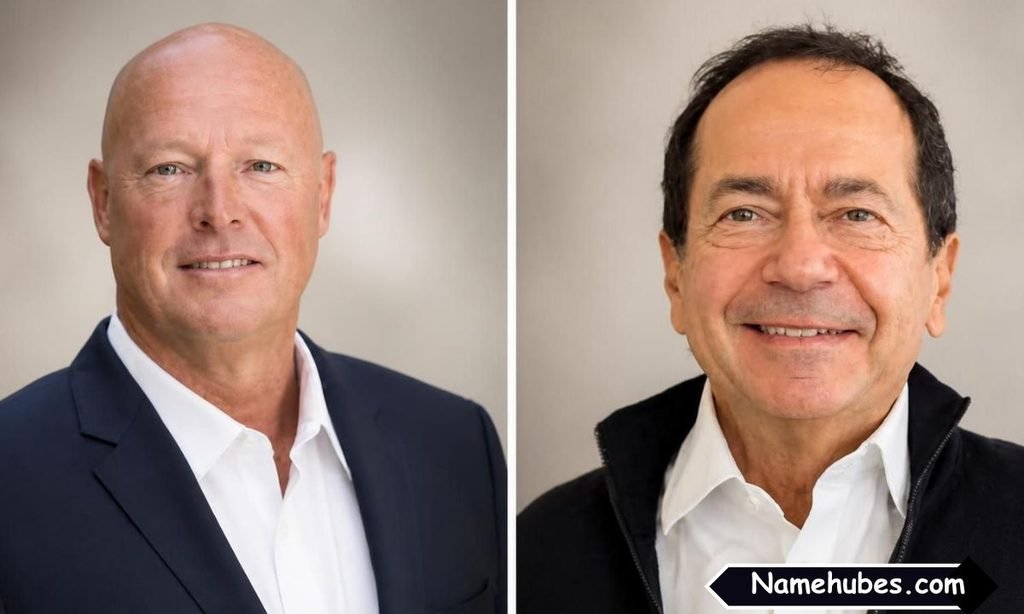
Both men sat at the top of their organizations. Their daily work looked nothing alike.
Corporate CEO vs. Hedge Fund Manager
A corporate CEO runs an organization. A hedge fund manager runs a portfolio. That single contrast explains most of the differences between Chapek and Paulson.
As a corporate executive, Chapek managed people, brands, and operations across theme parks, studios, and streaming. His decisions depended on thousands of employees carrying them out. A weak link in one division could slow progress everywhere. Disney’s shareholders owned the company. Its board held the power to remove him.
As a hedge fund founder, Paulson managed capital. A small research team fed him ideas. He could act on one strong conviction and place a large bet quickly. His accountability ran to fund investors, who could withdraw money after bad results.
Measuring success also differed. A CEO faces a long scorecard that includes revenue, profit, subscribers, culture, creative output, and brand health. A hedge fund manager faces a short one built on investment returns and assets under management. A short scorecard is simple to read. It also leaves less room for error during a bad stretch.
Their Industries, Responsibilities, and Leadership Styles
Chapek worked in entertainment, hospitality, and consumer products. Paulson worked in financial markets. Those industries shaped what each leader did every day. Disney’s parks sit at the center of a profit engine that depends on millions of visitors. A hedge fund depends on a much smaller circle of investors who judge results quickly.
Chapek’s responsibilities covered business operations such as pricing, park capacity, product launches, and streaming strategy. Admirers described him as a disciplined operator who liked data and process. Critics said that style came across as top-down. They argued that centralizing decisions left creative partners feeling shut out.
Paulson’s responsibilities centered on investment decisions and risk management. He built positions from deep research and then held them even when most of the market disagreed. That contrarian streak earned his biggest win. It also drove his concentrated investment bets, which cut both ways.
The skills differ as well. Corporate management rewards communication, patience, and the ability to balance competing groups. Investment management rewards research, timing, and nerve. A great CEO isn’t automatically a great investor. The reverse holds true too.
Did Bob Chapek and John Paulson Have a Business Connection?
No public record shows a direct business connection between the two men. They never ran a company together, launched a joint venture, or shared a known board seat. Chapek built his career at Disney. Paulson built his at Paulson & Co. Their industries rarely overlapped.
Any link would be indirect. Large investment firms often hold shares in major public companies such as Disney. Still, a link of that kind would be an assumption rather than a documented fact. Without reliable public information about specific holdings, it’s safest to say there’s no confirmed business tie.
So why do people search for the two together? The pairing most likely comes from comparison interest. Chapek represents the corporate executive path. Paulson represents the founder-investor path. Setting them side by side makes the differences easy to see. That’s the real connection: a shared place in the conversation about business careers, not a shared project.
What Business Students Can Learn From Bob Chapek and John Paulson
These two careers offer practical lessons for anyone studying business or building a career. Here are the main takeaways:
- Timing shapes outcomes. Chapek took over Disney weeks before a pandemic. Paulson spotted the housing bubble before most of the market. Skill matters, but timing can amplify it or undercut it.
- Research builds conviction. Paulson’s housing trade came from long, careful study. Strong ideas need evidence behind them.
- Concentration cuts both ways. Big positions create big wins. They also create big losses, so risk management matters.
- Trust is fragile. Board confidence and investor trust can vanish far faster than it took to earn. Both men learned this the hard way.
- Communication counts. Chapek’s story shows that operating skill can’t replace clear, timely communication with employees, creative partners, and the public.
- Repeating success is hard. One great year doesn’t guarantee another. Paulson’s later results show how quickly conditions change.
Frequently Asked Questions
Who Are Bob Chapek and John Paulson?
Bob Chapek is a former CEO of The Walt Disney Company who led it from February 2020 to November 2022. John Paulson is an American billionaire investor and the founder of Paulson & Co. He became famous for betting against risky mortgage securities before the 2008 financial crisis.
Are Bob Chapek and John Paulson Related?
No. No public information shows any family relationship between them. They come from different industries and built their careers at different organizations. The two names appear together mainly in business comparisons.
Did Bob Chapek and John Paulson Work in the Same Industry?
No. Chapek worked in entertainment, theme parks, and consumer products at Disney. Paulson worked in finance and investing at Paulson & Co. The only overlap is that both led large, high-profile operations.
What Is the Main Difference Between a CEO and a Hedge Fund Manager?
A CEO runs a company and leads employees across many functions. A hedge fund manager invests money on behalf of clients and is judged mainly on returns. The CEO answers to a board and shareholders. The hedge fund manager answers to fund investors.
Final Thoughts
Bob Chapek and John Paulson reached the top of business by different paths. Chapek spent decades at Disney before leading it as CEO from February 2020 to November 2022. He guided the company through the pandemic and streaming growth. Then the board lost confidence and replaced him with Bob Iger.
Paulson founded his investment firm in 1994 and earned billions by betting against risky mortgage securities before the 2008 crisis. Later losses pushed investors away. The two roles differ sharply. A CEO answers to a board and shareholders. A hedge fund manager answers to fund investors. Both learned trust fades.
