


Searches for Rodolphe Saadé and Greg Hayes usually come from readers who want to know whether two prominent executives have worked together. Rodolphe Saadé leads CMA CGM, a major French shipping and logistics group. Greg Hayes spent most of his career at United Technologies Corporation and later helped form RTX, an aerospace and defense company. As of 2026, publicly available records do not show a partnership, joint venture, family tie, or shared corporate role between the two men.
Their names are linked mainly by the global industries they represent, which depend on trade, transportation, and complex supply chains. This article explains each career, compares their companies, and separates documented facts from assumptions based on industry overlap.
Who Is Rodolphe Saadé?
Rodolphe Saadé is a French-Lebanese business executive best known as the head of CMA CGM. He comes from the family that built the company, so his career is closely tied to its history and direction. Understanding his role requires looking at both his personal path inside the company and the business he now leads.
Rodolphe Saadé’s Background and Role at CMA CGM
Rodolphe Saadé’s story begins with his family’s shipping company in Marseille, France. His father, Jacques Saadé, founded CMA in 1978 with a service linking Marseille to other Mediterranean ports. The business grew steadily over the following decades, expanded across international routes, and eventually became CMA CGM after a merger with the French shipping firm Compagnie Générale Maritime.
Rodolphe joined the family business in 1994, after first gaining experience outside it. His early assignments took him to the United States and Hong Kong, where he worked on shipping operations and management tasks. These postings gave him direct exposure to international trade and the practical problems of running a company across several countries with different rules, languages, and customers.
His responsibilities grew over time. In 2009, he took charge of the group’s financial restructuring, a difficult task for any large shipping company during a period of weak global trade. He was also involved in CMA CGM’s efforts surrounding Neptune Orient Lines, a Singapore-based container shipping company that CMA CGM later acquired. These experiences built the financial and operational knowledge that prepared him for a top role.
In 2017, Jacques Saadé appointed Rodolphe as chief executive officer of CMA CGM. Later that same year, the board combined the roles of Chairman and CEO under Rodolphe. This gave him control over both the strategy and the governance of the group, and he has led the company through a period of diversification and expansion since then.
CMA CGM’s Global Shipping and Logistics Business
CMA CGM is one of the largest container shipping companies in the world. It moves goods between continents using a fleet of container vessels, and it competes with other global shipping lines for customers who need reliable ocean freight. Its reach extends across many regions, which is why it is often described as a global player rather than a regional carrier.
The company’s business is no longer limited to ships. CMA CGM describes its activities as spanning maritime, land, air, logistics, and media solutions. This means it handles trucking and rail connections, warehousing, freight forwarding, and port terminal operations in addition to ocean transport. For a customer, this can mean one company manages the entire journey of a shipment from factory to store.
Under Rodolphe Saadé’s leadership, the group has pushed into areas beyond traditional shipping. It has built air cargo services, invested in port terminals, and developed a media arm. This shift reflects a broader trend in the freight industry, where companies that offer several transport methods can win more customers and reduce their reliance on one market.
Who Is Greg Hayes?
Greg Hayes is an American business executive whose career combined corporate finance, strategy, and leadership in the aerospace and defense sector. He is best known for his work at United Technologies Corporation, commonly called UTC, and for guiding the company through its transition into RTX. His career shows how a finance professional can rise to run a complex industrial group.
Greg Hayes’s Career at United Technologies and RTX
Greg Hayes joined United Technologies in 1999 through its merger with Sundstrand Corporation, a manufacturer of aerospace and industrial products. UTC was a large American conglomerate with businesses in elevators, air conditioning, jet engines, and aircraft systems, so his early work exposed him to many parts of the company. He started in finance and gradually took on broader responsibilities.
From 2008 to 2014, Hayes served as UTC’s chief financial officer. In this role, he oversaw the company’s financial planning, reporting, and capital decisions. He later expanded his scope into corporate strategy and business development, which meant deciding which businesses to grow, buy, or sell. These skills became central to his later leadership.
In 2014, Hayes became chief executive officer of UTC. During his tenure, the company reshaped its portfolio. It completed major transactions involving Sikorsky, a helicopter manufacturer, and Rockwell Collins, an avionics supplier. It also separated its Otis elevator business and its Carrier heating and cooling business into independent public companies, leaving a stronger focus on aerospace.
The defining moment of his career came in 2020, when UTC’s remaining aerospace businesses, including Pratt & Whitney and Collins Aerospace, were combined with Raytheon Company, a major defense contractor. The result was RTX. Hayes became the chief executive of the new company, and he led it through the first years of its integration.
His Leadership Role After Leaving RTX
Hayes eventually stepped back from day-to-day leadership at RTX. Christopher Calio succeeded him as chief executive in 2024, and Hayes moved into the role of Executive Chairman. In this position, he focused on board matters and advised the company during the transition rather than running daily operations.
Later, RTX announced that Hayes would leave the Executive Chairman position and serve as a special adviser through January 2, 2026. A special adviser role is typically a short-term advisory position that supports a leadership handover. As of 2026, the public record shows that his formal executive involvement with RTX has ended, and his career is now viewed mainly through his years at UTC and RTX.
Are Rodolphe Saadé and Greg Hayes Connected?
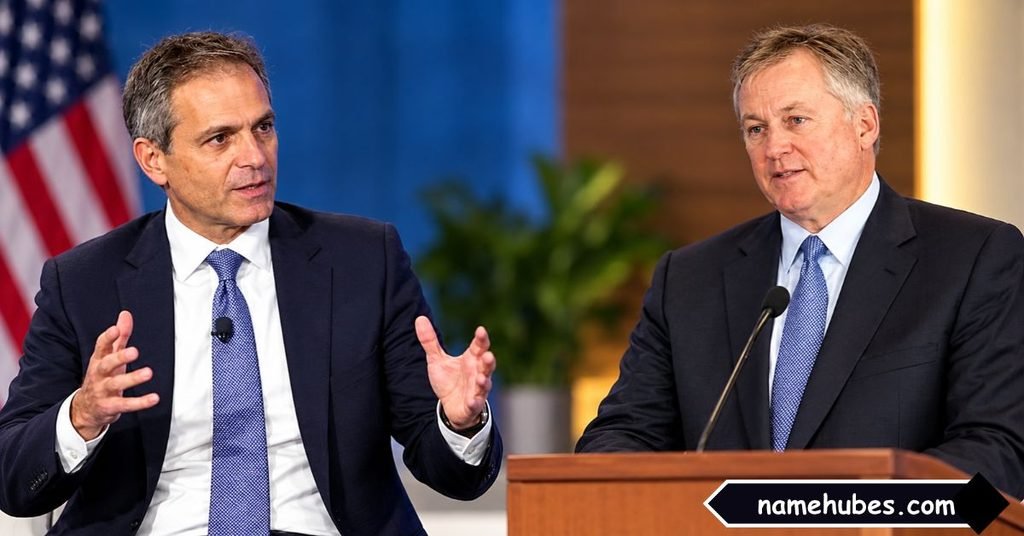
The two executives are often discussed together, but the connection is mostly based on their industries and business scale. Public records do not show a direct relationship between them. Separating the documented facts from assumptions is the best way to understand why their names appear side by side.
Is There Evidence of a Direct Business Partnership?
Publicly available information does not show a business partnership between Rodolphe Saadé and Greg Hayes. Neither man is recorded as a partner in a joint venture, a shared investment, or a company they both run. Their roles sit in separate organizations with separate ownership structures, boards, and strategies.
This matters because online biographies sometimes link people who share an industry, a similar company size, or a similar era of leadership. Those similarities can create the impression of a relationship, even when none exists. Shipping and aerospace are both global industries, but a shared sector does not mean two executives work together.
Based on the public records reviewed for this article, there is no clear evidence of a family relationship, a joint venture, or a shared corporate role linking the two men. Any claim of a direct partnership should be treated with caution unless it is backed by a company filing, an official announcement, or a reliable news report.
Did Greg Hayes Ever Work for CMA CGM?
There is no reliable public record showing that Greg Hayes worked for CMA CGM. His documented career is built around United Technologies, RTX, and the aerospace and defense businesses that those companies contain. His jobs, from finance to chief executive, were all within that corporate group.
The confusion often comes from the similar role titles and the large international scale of both companies. A reader who sees “CEO” and “global logistics” in one place and “CEO” and “international aerospace” in another may assume a link. A clear check of each executive’s career history shows two distinct paths.
How CMA CGM and RTX Operate in Different Industries
CMA CGM and RTX both serve global markets, but they earn their revenue in different ways. One moves goods across the world, and the other designs and builds advanced technology for aircraft and defense customers. The table below compares the two businesses at a basic level.
| Feature | CMA CGM | RTX |
| Core industry | Shipping and logistics | Aerospace and defense |
| Main products and services | Container shipping, freight forwarding, air cargo, terminals | Aircraft engines, aircraft systems, defense technology |
| Key subsidiaries or units | CMA CGM AIR CARGO, logistics and terminal operations | Pratt & Whitney, Collins Aerospace, Raytheon |
| Typical customers | Importers, exporters, manufacturers, retailers | Airlines, aircraft makers, government defense agencies |
| Main business model | Moving cargo for a fee across global routes | Developing and selling technology and long-term aftermarket services |
CMA CGM’s Role in Shipping, Logistics, and Air Cargo
CMA CGM’s role sits at the center of international trade. When a manufacturer in Asia ships products to Europe or North America, a shipping line like CMA CGM often moves the containers across the ocean. Other companies may handle trucks, warehouses, or customs paperwork, but the ocean leg is a critical link in the chain.
The company’s air cargo business adds another layer. CMA CGM AIR CARGO was launched in 2021 to offer faster transport for goods that cannot wait weeks at sea. Air freight is more expensive than ocean freight, but it is valuable for electronics, medical supplies, and time-sensitive products. By adding air services, CMA CGM can offer customers a choice of speed and cost.
Logistics services tie these transport methods together. A customer may need a single provider to plan the route, book the space, and track the cargo across ships, planes, and trucks. This integrated approach is one reason logistics groups have grown into broad service companies rather than simple carriers.
RTX’s Role in Aerospace and Defense
RTX focuses on technology that keeps aircraft flying and defense systems working. Its businesses are organized into several units, and each one supports a different part of the aerospace and defense market. The company’s work is highly specialized and often tied to long government or airline programs.
Pratt & Whitney designs and manufactures aircraft engines for commercial and military aircraft. Engines are among the most complex and expensive parts of an aircraft, and they require years of testing and certification. Collins Aerospace develops systems and components, such as avionics, cabin systems, and sensors, that many aircraft makers use across their fleets.
Raytheon, which joined the group in the 2020 combination, produces defense technology, including missile systems, radar, and electronic warfare equipment. Its products are sold largely to government defense agencies, and they require strict security and long development cycles. Together, these units make RTX a central player in the global aerospace industry.
| Discover More Celebrities |
| Jessie Murph Age: How Old Is the Singer in 2026? |
| Safra Catz and John Stankey: Careers and Leadership in 2026 |
| Constantine Yankoglu: Biography, Marriage, and Personal Life |
Rodolphe Saadé vs. Greg Hayes: Leadership and Business Influence
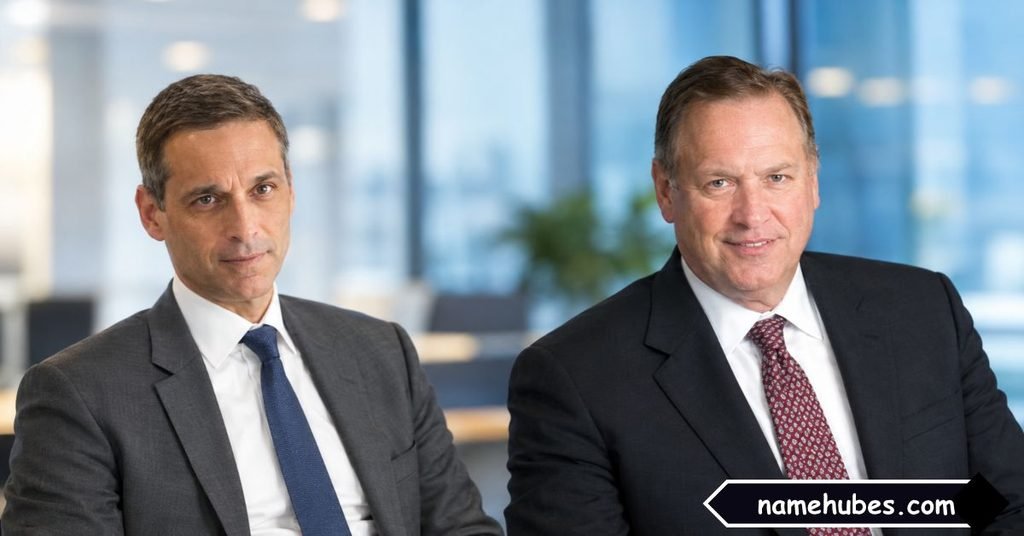
Comparing the two executives shows how leadership can look very different across industries. Both have guided large multinational companies, but their approaches reflect the needs of their markets and their own career paths. The comparison below highlights the main differences.
Rodolphe Saadé’s leadership is shaped by family ownership and by the need to adapt a shipping business to modern logistics demands. He has focused on expanding the group’s range of services, from ocean freight to air cargo and terminals. His influence is visible in the company’s shift from a traditional carrier toward a broader transport and logistics provider.
Greg Hayes’s leadership was shaped by corporate finance and the need to reorganize a large industrial group. He is associated with separating businesses that did not fit the company’s future and with building RTX through a major combination. His influence is visible in the sharper focus of his former company on aerospace and defense.
Both approaches show how a chief executive can change a company’s direction. One expanded a family business into new service areas, while the other reshaped a diversified industrial group into a focused aerospace company. Their careers show that leadership depends on the market, the company’s history, and the choices made at key moments.
What Happened to Greg Hayes After Leaving RTX?
Greg Hayes’s exit from RTX’s senior leadership happened in stages rather than all at once. After his time as chief executive, he moved into the Executive Chairman role, which allowed him to stay involved in governance while a successor took over daily management. This kind of gradual transition is common in large companies because it helps protect strategy and relationships during a change in leadership.
Christopher Calio became chief executive in 2024, and Hayes’s role shifted accordingly. Later, RTX announced that Hayes would leave the Executive Chairman position and serve as a special adviser through January 2, 2026. The arrangement gave the company a defined end point for his advisory work and a clear handover of authority.
As of 2026, Hayes is not recorded as holding an active executive role at RTX. His public legacy rests on his years at UTC and his role in creating RTX, which remain the main reference points for his career. Anyone looking for current activities should check RTX’s official communications, since personal career moves can change after this article is published.
Frequently Asked Questions About Rodolphe Saadé and Greg Hayes
Readers often ask a few direct questions about these two executives. The answers below are based on documented career information and clarify where their names overlap and where they do not.
What Company Does Rodolphe Saadé Lead?
Rodolphe Saadé leads CMA CGM as Chairman and Chief Executive Officer. The group operates in container shipping, logistics, air cargo, port terminals, and media. Its activities cover maritime, land, air, and logistics services across many countries.
What Company Was Greg Hayes the CEO Of?
Greg Hayes was chief executive of United Technologies Corporation and later served as the first chief executive of RTX after the 2020 combination with Raytheon. Christopher Calio succeeded him as RTX’s chief executive in 2024. Hayes’s career therefore belongs to the aerospace and defense sector rather than shipping.
Are Rodolphe Saadé and Greg Hayes Business Partners?
There is no verified public evidence that Rodolphe Saadé and Greg Hayes are business partners. Their careers are tied to different companies, boards, and industries. Shared industry experience does not prove a partnership, so claims of a joint business should be checked against official company announcements or reliable reporting.
Why Are Rodolphe Saadé and Greg Hayes Mentioned Together?
The two names appear together because both have led large international companies tied to global trade, transportation, technology, and aviation. Readers searching for executives in these fields may find both names in the same results. However, this overlap reflects their industries rather than any direct connection between them.
Conclusion
Rodolphe Saadé and Greg Hayes lead two major international companies, but the public record does not show that they work together. Saadé heads CMA CGM, a French shipping and logistics group that now runs air cargo, terminals, and media businesses alongside container shipping. Hayes spent most of his career at United Technologies and later led RTX, the aerospace and defense company formed with Raytheon in 2020.
Their names often appear together because both operate in global industries tied to trade, transportation, and aviation. However, shared industry does not prove a partnership, joint venture, or family link. Verified records show two separate career paths, so claims of a direct business relationship should be checked against official announcements.
