


Phebe Novakovic and Brian Moynihan lead two of America’s most closely watched institutions. Novakovic runs General Dynamics, the defense contractor behind Columbia-class submarines. Moynihan runs Bank of America, the second-largest U.S. bank. Both have held the top job for more than a decade. Novakovic holds General Dynamics shares worth over $264.5 million. Moynihan collected $41 million in total pay for the latest fiscal year.
Their paths couldn’t look more different. She came from the CIA and the Pentagon. He rose through bank mergers and a financial crisis. On January 1, 2027, Novakovic becomes executive chairman, and Danny Deep steps in as CEO.
Who Are Phebe Novakovic and Brian Moynihan?
Phebe Novakovic is chair and CEO of General Dynamics, a global aerospace and defense company. Brian Moynihan is chair and CEO of Bank of America, a giant in banking and financial services. Their industries share almost nothing on the surface. Yet both leaders steer heavily regulated institutions where one bad call can cost billions. That’s why readers search for them together.
Phebe Novakovic at a Glance
Novakovic has led General Dynamics since 2013. Before that she spent years inside government, which gives her a rare view of how defense buyers think. General Dynamics reported $52.6 billion in revenue for the latest fiscal year and employs more than 100,000 people. Her title changes soon, but she isn’t leaving the company.
Here are the facts that define her profile:
- Chair and CEO of General Dynamics (CEO since 2013)
- Former CIA officer and Defense Department adviser
- Corporate director at JPMorgan Chase
- Becomes executive chairman on January 1, 2027
- Holds an estimated $264.5 million in General Dynamics stock
Brian Moynihan at a Glance
| Detail | Phebe Novakovic | Brian Moynihan |
| Company | General Dynamics | Bank of America |
| Industry | Aerospace and defense | Banking and financial services |
| Current role | Chair and CEO (executive chairman from Jan. 1, 2027) | Chair and CEO |
| CEO since | 2013 | January 2010 |
| Company scale | $52.6 billion revenue | $30.5 billion net income |
| Best-documented money figure | About $264.5 million in company stock | $41 million total pay |
Phebe Novakovic’s Career and Leadership at General Dynamics
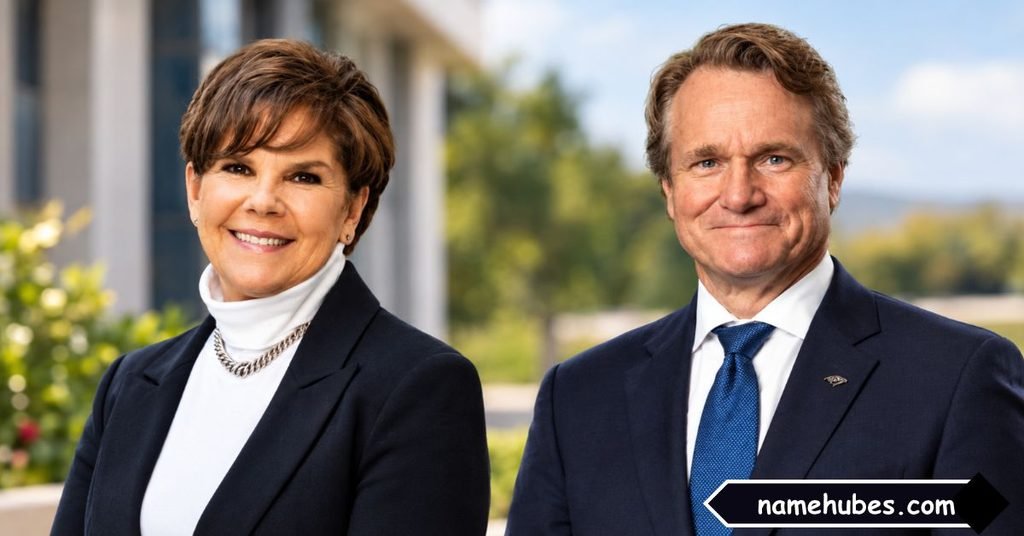
Novakovic didn’t climb a corporate ladder from day one. She started in national security, and that background still shapes how she reads risk, politics, and long-range planning.
Education and Early Career in Government Service
Novakovic studied at Smith College, a women’s liberal arts college in Massachusetts. She then earned a degree from the Wharton School at the University of Pennsylvania, one of the top business schools in the country. After school she worked as a CIA officer. The Central Intelligence Agency gathers foreign intelligence for U.S. leaders.
She later served as special assistant to the secretary and deputy secretary of defense. The Defense Department runs the U.S. military, and its headquarters is the Pentagon. That job put her inside the buyer’s office. She learned how the Pentagon weighs cost, schedule, and politics.
This résumé gave her two edges:
- She understood how defense customers make decisions.
- She practiced judgment under incomplete information.
How Novakovic Rose to Lead General Dynamics
She joined General Dynamics in 2001. Over the next dozen years she moved through senior finance and strategy roles. In 2013 the board named her chair and CEO. Few outsiders-turned-insiders reach the top of a defense prime that fast.
This ordered timeline shows the key steps in her path:
- Before 2001: CIA officer and Defense Department adviser
- 2001: Joins General Dynamics
- 2013: Becomes chair and CEO
- 2019: Company wins a record Navy shipbuilding contract
- 2026: Chairs the Aerospace Industries Association board of governors
- January 1, 2027: Moves to executive chairman
Her Phebe Novakovic General Dynamics CEO tenure now spans 13 years. That’s a long run for any Fortune 500 executive.
Her Leadership Strategy and Major Business Responsibilities
Novakovic plays the long game. Defense programs run for decades, so she builds relationships and delivery records that pay off slowly. The Columbia-class submarine program shows how this works.
The Navy needed a new generation of nuclear submarines. The program demanded flawless execution across many years. In 2019 General Dynamics won a shipbuilding contract worth up to $24.2 billion, with Newport News Shipbuilding as a subcontractor. Newport News is a major Navy shipyard in Virginia. In March 2026 the company’s Electric Boat unit added a $15.3 billion contract modification. Electric Boat, based in Connecticut, designs and builds submarines for the U.S. Navy.
Her duties reach well beyond ships. She also oversees General Dynamics Information Technology, the company’s large IT arm. She chairs the board of governors at the Aerospace Industries Association, a trade group for aerospace and defense firms. She succeeded L3Harris chief Christopher Kubasik in that seat. She also chairs the Association of the United States Army, a nonprofit that backs soldiers and their families. And she sits on the board of the Center for Strategic and International Studies, a Washington policy think tank.
Brian Moynihan’s Career and Rise to CEO of Bank of America
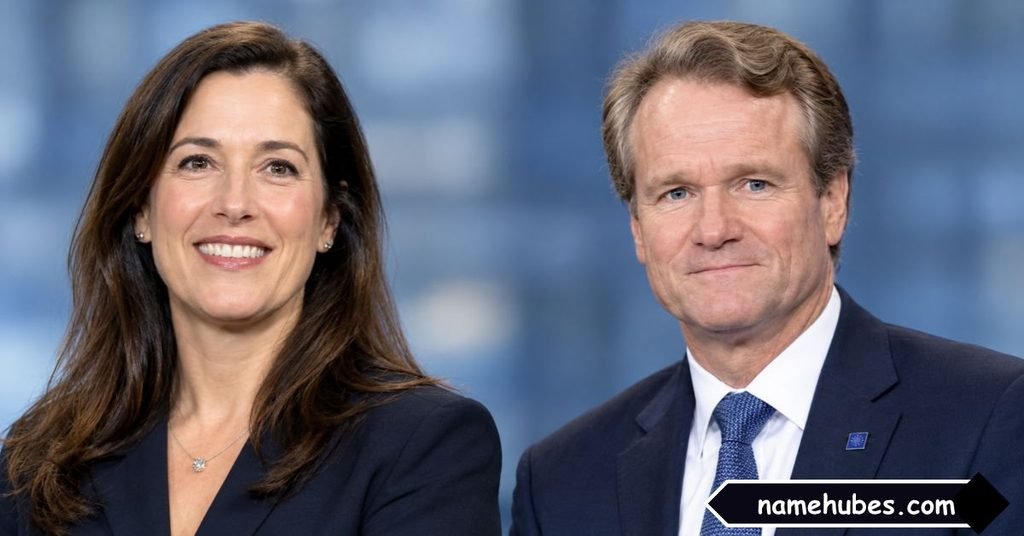
Moynihan took the opposite route. He grew up inside the banking system and rose through acquisitions, crises, and reorganizations.
Education and Early Career in Banking
Moynihan earned his undergraduate degree at Brown University. He then studied law at Notre Dame. In April 1993 he joined FleetBoston Financial, a large New England bank. Bank of America bought Fleet in 2004, and Moynihan came along with the deal. His banking career began on the law side and moved quickly into running businesses.
How Brian Moynihan Became CEO
He worked across almost every corner of the bank. After the merger he led global wealth management and investment management. Then, from 2007 to 2009, he ran global corporate and investment banking. After that he took charge of consumer banking and small business banking. Few executives touch that many divisions before getting the top job.
The board named him CEO at age 50. He said he felt honored to lead the company. His timeline looks like this:
- April 1993: Joins FleetBoston Financial
- 2004: Bank of America acquires Fleet
- 2007 to 2009: Runs global corporate and investment banking
- January 2010: Becomes CEO
- October 2014: Becomes chair
So if you’ve wondered how long has Brian Moynihan led Bank of America, the answer is more than 16 years as CEO.
His Leadership Strategy and Bank of America’s Transformation
His first years were rough. Bank of America ended a 20-year profit streak with two quarterly losses. The Merrill Lynch purchase drew heavy political heat. A congressional committee even criticized his early performance. That’s crisis management at its most public.
Moynihan answered with focus. He promised to refocus on the bank’s core strengths. He trimmed businesses, tightened risk management, and pushed for steady, organic growth rather than splashy deals. The approach worked. In a crisis, a boring plan executed well beats a bold plan that falls apart.
The latest results show how far the bank has come. This list summarizes the highlights from Bank of America’s most recent proxy statement:
- Net income rose 13% to $30.5 billion
- Diluted earnings per share jumped 19% to $3.81
- Net interest income hit a record, up 7%
- Investment banking fees rose 7%
- Asset management fees grew 12%
- About 680,000 net new checking accounts opened
- Net charge-off ratio stayed at 0.50%
The net charge-off ratio measures loans a bank writes off as uncollectible. A low number signals healthy lending. Together these figures show growth without reckless risk.
Phebe Novakovic and Brian Moynihan: Net Worth and Salary Comparison
Money questions drive a lot of the search interest here. The two executives differ in how much we can verify. Moynihan’s pay is public and easy to check. Novakovic’s wealth shows up mostly through her stock.
Phebe Novakovic’s Net Worth and Executive Compensation
Her wealth comes from equity. MarketBeat, a stock-tracking site, lists 766,457 General Dynamics shares. Those General Dynamics shares were worth more than $264.5 million as of March 2026. The same page reports a CEO salary of $6.69 million and about $11.7 million in share sales over time.
This table collects the main numbers. A short explanation follows, because the figures measure different things.
| Indicator | Figure |
| General Dynamics shares held | 766,457 |
| Estimated value of those shares | More than $264.5 million |
| Reported annual salary | $6.69 million |
| Total stock sold (insider records) | About $11.7 million |
Treat the $264.5 million as a floor, not a final net worth. It counts only her company stock. It leaves out real estate, other investments, and cash. Some websites throw out round numbers like $100 million or $200 million without sources. The share-based figure carries far more weight because it traces back to filings.
Brian Moynihan’s Net Worth and Annual Pay
Moynihan’s pay is easier to pin down. The board set his total compensation at $41 million, up from $35 million the year before. That’s a 17% jump. His base pay stays at $1.5 million with no cash bonus. The other $39.5 million comes as equity awards. That mix means his stock-based pay does most of the work.
| Period | Total compensation |
| Prior year | $35 million |
| Latest fiscal year | $41 million (up 17%) |
Is Brian Moynihan a Billionaire?
No. Nothing in the public record supports that claim. Even the highest published estimates stop around $300 million. His pay package is large by any normal standard, but a billion is a different league. Founders who own big stakes in their companies reach that level. Hired CEOs rarely do.
Peer pay puts his $41 million in context. JPMorgan Chase’s Jamie Dimon received $43 million. Citigroup’s Jane Fraser took home $42 million. Moynihan sits right in the middle of the big-bank pack.
| Discover More Celebrities |
| Dee Dee Gatton Biography: Age, Height, and Personal Life |
| David Lawler and Bruce Broussard: Their Stories Explained |
| Lady Gaga and David Tepper: The Story Behind Their Names |
Comparing Their Leadership Styles and Business Performance
Reading Phebe Novakovic and Brian Moynihan side by side reveals sharp contrasts. It also reveals surprising overlaps. Both chair their boards. Both avoid the spotlight that flashier executives chase. Both favor patience over drama.
Novakovic’s Leadership in the Defense Industry
Novakovic leads in aerospace and defense, a field where customers are governments. Her style blends financial discipline with deep political fluency. She doesn’t court headlines. She builds delivery records. Her government years taught her to read a Pentagon budget the way a banker reads a balance sheet.
Moynihan’s Leadership in Banking and Financial Services
Moynihan leads in a business where customers are millions of households and companies. His style leans toward discipline and consistency. He took over amid a meltdown and later steered the bank through the pandemic. He rarely chases attention. Instead, he sticks to a plan and repeats it until the results arrive.
The table below compares their backgrounds and tenure. It also answers a common question: which CEO has served longer?
| Category | Novakovic | Moynihan |
| Background | CIA, Pentagon, then defense industry | Law, then banking from the ground up |
| Route to CEO | Joined in 2001, promoted in 2013 | Joined through acquisition, promoted in 2010 |
| CEO tenure | 13 years through 2026 | More than 16 years |
| Board style | Chair and CEO, then executive chair | Chair and CEO |
| Succession plan | Danny Deep named for Jan. 1, 2027 | List exists, no date announced |
| Primary customer | U.S. government and global buyers | Consumers, businesses, and institutions |
| Wealth driver | General Dynamics stock | Equity awards and stock |
How Their Companies Measure Executive Performance
Bank of America ties Moynihan’s equity to long-term targets. To earn the maximum payout, the bank must generate $112 billion in combined net income from 2026 through 2028. That equals roughly $37 billion a year. It’s higher than any annual profit the bank has ever posted. So the pay package demands a record.
General Dynamics judges its chief differently. Defense firms win or lose on contract awards, program delivery, and backlog. Progress shows up over years. That’s why Novakovic’s submarine wins matter so much to how people view her record.
Major Challenges Facing General Dynamics and Bank of America
Defense and banking seem worlds apart. But the daily leadership challenges rhyme.
Defense Contracts, Government Spending, and Regulation
Defense spending moves with politics. In January 2026 General Dynamics stock climbed 3% after a proposal for a $1.5 trillion military budget. A surge like that helps. A sudden freeze would hurt. Novakovic has to plan for both.
She also answers to the Pentagon and Congress. Every program faces audits, hearings, and reviews. A single missed milestone can invite headlines.
Technology adds another layer. General Dynamics Information Technology, the company’s IT unit, recently saw a leadership change. Amy Gilliland stepped down as president after leading the 26,000-person unit since 2017. Novakovic’s team must balance legacy hardware with software-driven warfare.
Banking Regulations, Economic Conditions, and Digital Transformation
Moynihan answers to the Federal Reserve and other banking regulators. Regulators check capital, lending, and risk controls constantly. The bank must prove compliance, not just claim it.
Economic conditions matter too. Interest rates, consumer spending, and loan defaults all shape results. A bank’s capital plan has to survive several economic cycles.
Technology is the third front. Moynihan has said artificial intelligence and automation help control expenses and headcount. The bank pairs that with digital growth. Customers moved hundreds of millions of person-to-person payments through its apps in 2024. Automation at Bank of America isn’t a side project. It’s central to the business.
Both leaders also share a people problem. General Dynamics employs more than 100,000 people. Bank of America employs a similar army across branches, trading floors, and tech teams. Keeping them aligned takes clear priorities and constant repetition.
Are Phebe Novakovic and Brian Moynihan Considered Effective CEOs?
By most public measures, yes. The evidence comes from financial performance, industry recognition, and the long tenures themselves. Boards don’t keep underperformers for 13 or 16 years.
Business Results and Leadership Achievements
Novakovic’s record includes the biggest Navy shipbuilding win in General Dynamics history and a $15.3 billion follow-on for Columbia-class submarines. Fortune ranked her No. 30 on its 2026 list of the 100 Most Powerful Women in business. She ranked No. 36 the year before. That’s a clear upward move.
Moynihan’s record includes a turnaround from the crisis years to $30.5 billion net income. Earnings per share rose 19%. Record net interest income and healthy fee growth in investment banking and wealth management point to a balanced business. Critics did question his early performance, but the numbers since then speak loudly.
How Their Leadership Approaches Differ
Novakovic leads from the customer’s side of the table. Her government past helps her anticipate what the Pentagon wants. Moynihan leads from the institution’s inside. His rise through wealth management, investment banking, and consumer banking helps him see the whole machine.
The two also differ on risk. Novakovic manages execution risk, meaning the danger of missing delivery targets on huge programs. Moynihan manages financial risk, meaning losses from loans and markets. Both approaches reward caution and punish overreach.
Corporate Governance, Executive Accountability, and Succession
Few moments test a CEO like handing over power. Both leaders hold dual roles, so governance matters a lot here.
Board Responsibilities and Executive Compensation
Both leaders serve as chair and CEO. Moynihan has chaired Bank of America’s board since October 2014. Novakovic chairs General Dynamics now. Combining the roles can speed decisions. It also concentrates power, so boards must stay watchful.
Their outside commitments show where each leader invests time. This list covers the main ones:
- Novakovic: JPMorgan Chase (corporate director), Center for Strategic and International Studies, Association of the United States Army (chair), Aerospace Industries Association (chair of governors)
- Moynihan: Sustainable Markets Initiative (chair), Bank Policy Institute (board member)
The Sustainable Markets Initiative is a coalition promoting sustainable business practices. The Bank Policy Institute is a research and advocacy group for large banks. So does Phebe Novakovic sit on bank boards? Yes, at JPMorgan Chase. That seat links the defense and banking worlds directly.
Pay design also supports accountability. Moynihan’s equity vests only if earnings targets are met. That keeps his rewards tied to results rather than good intentions.
Leadership Continuity and Succession Planning
General Dynamics picked Danny Deep, a 25-year company veteran, as its next CEO. He has served as president for most of the past year. He led Land Systems from 2020 to 2024 and later served as executive vice president of global operations. The board tested him across several divisions before naming him. Novakovic told reporters she’s certain he will be an outstanding CEO.
The board also announced the move months before the effective date. That timing lets employees and investors adjust. Think of a relay race. The best handoffs happen while both runners are moving. The General Dynamics CEO succession plan follows that pattern. So, is Phebe Novakovic still CEO of General Dynamics? Yes, until January 1, 2027.
Bank of America’s picture is less clear. Moynihan has told Bloomberg that a succession list exists. He won’t share names. He also hasn’t given a departure date. That uncertainty is normal for a bank, but investors watch it closely.
What Phebe Novakovic and Brian Moynihan Reveal About Executive Leadership
You don’t need a Fortune 500 title to use these lessons. Their careers point to a few habits that anyone can copy.
These five takeaways come straight from their records:
- Build range early. Both leaders held many roles before reaching the top.
- Stay close to operations. Deep’s operations background shows what Novakovic values in a successor.
- Plan succession years ahead. A smooth handoff protects customers and morale.
- Tie rewards to results. Moynihan’s pay depends on hitting earnings targets.
- Play the long game. Submarines and bank balance sheets both punish short-term thinking.
Here’s a tip you can try this week. Pick one skill outside your current role. Spend an hour a week learning it. Moynihan didn’t reach the CEO’s chair by mastering a single lane. He learned wealth management, investment banking, and consumer banking along the way. Novakovic did the same across intelligence, defense policy, and corporate finance.
Their numbers tell one story of staying power. Novakovic’s stock holdings top $264.5 million. Moynihan’s latest pay reached $41 million. Both run organizations that shape national security or the national economy. How each manages the next transition will shape the legacy they leave.
Frequently Asked Questions About Phebe Novakovic and Brian Moynihan
Is Brian Moynihan a Good CEO?
Most evidence says yes. He led Bank of America out of the crisis era and into $30.5 billion in net income. Earnings per share rose 19%, and the bank added about 680,000 net new checking accounts. His early years drew criticism from a congressional committee, but the long-term record is strong. Judgments vary, though, depending on whether you weigh shareholder returns, customer service, or pay.
How Much Money Does Brian Moynihan Make?
Brian Moynihan earned $41 million in total compensation for the latest fiscal year. That figure included a $1.5 million base salary and $39.5 million in equity awards. He got no cash bonus. His pay rose 17% from $35 million the year before. Most of it arrives as stock that depends on long-term performance.
What Is Phebe Novakovic Known For?
Novakovic is known as the chair and CEO of General Dynamics, which she has led since 2013. She’s also known for her unusual start as a CIA officer and Defense Department adviser. Her biggest business wins include the Navy’s Columbia-class submarine work. Fortune ranks her among the most powerful women in business. On January 1, 2027, she becomes executive chairman.
What Companies Do Phebe Novakovic and Brian Moynihan Lead?
Novakovic leads General Dynamics, an aerospace and defense company with business units like Electric Boat and General Dynamics Information Technology. Moynihan leads Bank of America, one of the biggest U.S. banks. Novakovic also serves as a director at JPMorgan Chase. Those two firms anchor very different parts of the economy, yet both depend on trust, regulation, and long-term planning.
Conclusion
Phebe Novakovic and Brian Moynihan reached the top of their industries by very different roads. Novakovic moved from the CIA and the Pentagon into General Dynamics, where Columbia-class submarine contracts define her record. Moynihan climbed through Bank of America’s mergers and steered it past the financial crisis to $30.5 billion in net income.
Their pay tells a similar story. Novakovic’s shares top $264.5 million, while Moynihan earned $41 million in total pay. Danny Deep takes over General Dynamics on January 1, 2027, so her handoff is set. Moynihan’s successor list stays private. Both prove patience beats drama in executive leadership.
