

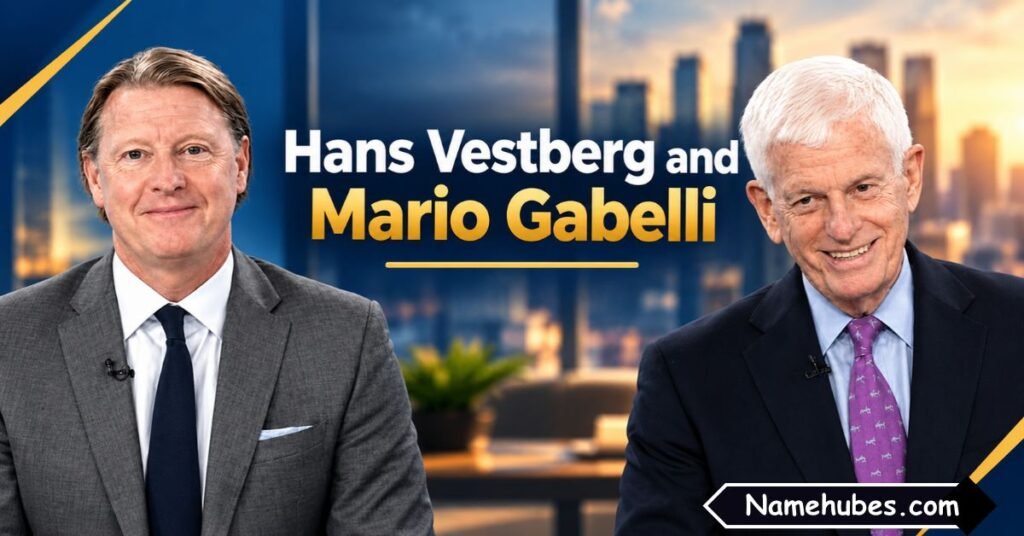
Hans Vestberg and Mario Gabelli built influential American business careers in two very different fields. Vestberg spent decades in telecommunications, rising through Ericsson before leading Verizon, where he oversaw network investment, 5G expansion, and digital transformation. Gabelli made his name in investment management, becoming known for value investing and for founding Gabelli & Company and GAMCO Investors.
Their careers are often discussed together, but no verified business partnership between them is publicly documented. Instead, their work offers a useful contrast: one shows how infrastructure and technology decisions shape a company’s future, while the other shows how careful analysis of underlying value guides investment choices. Together, they illustrate two essential sides of business success, operational execution and financial judgment.
Who Is Hans Vestberg?
Early Career and Professional Background
Hans Vestberg is a Swedish business executive whose career was built in the telecommunications industry. He joined Ericsson in 1991 and gained experience in finance, international operations, and technology management. That range later proved useful, because running a telecommunications company requires understanding how networks, budgets, and customers interact across many countries.
Over time he became chief executive officer of Ericsson, a role that strengthened his reputation as an international technology leader. His work there gave him a practical understanding of how telecommunications companies plan, build, and maintain infrastructure in different markets. That experience shaped the approach he later brought to American carriers.
Hans Vestberg’s Leadership at Verizon
Vestberg joined Verizon in 2017 as chief technology officer and president of Global Networks. In that role he was responsible for the technical foundation of one of the largest telecommunications providers in the United States. He became Verizon’s chief executive in 2018 and chairman in 2019.
The following list summarizes his main career milestones as described in publicly available material.
- In 1991, he joined Ericsson.
- Later, he became chief executive officer of Ericsson.
- In 2017, he joined Verizon as chief technology officer and president of Global Networks.
- In 2018, he became Verizon’s chief executive officer.
- In 2019, he became Verizon’s chairman.
- Later, he stepped down as chief executive and Verizon named him a special advisor and former chairman and chief executive.
During his leadership, Verizon focused on network investment and digital transformation. The company expanded its 5G strategy and broadband capabilities, areas that became central to how it competed with other carriers.
Who Is Mario Gabelli?
Background and Investment Philosophy
Mario J. Gabelli is an American investor, financial analyst, and business leader. He graduated summa cum laude from Fordham University and earned an MBA from Columbia Business School. His training in accounting and business gave him the analytical foundation for a career built around company valuation rather than short-term market movements.
Gabelli became known for studying a company’s underlying value. His investment philosophy emphasizes fundamental research, careful company valuation, and the identification of potential catalysts that could help a stock’s price move toward that value. One of the methods associated with his approach, called Private Market Value with a Catalyst, considers what a business might be worth to a potential strategic acquirer and what could help unlock that value. The method is useful for understanding how he thought about the gap between price and worth, although any investor applying it still needs to do independent research.
Building GAMCO Investors
Gabelli founded Gabelli & Company as an institutional research business in 1976. A year later, in 1977, he established GAMCO Investors. Over time, the business developed into an investment management organization serving both individuals and institutions.
The progression from research firm to investment manager shows how his analytical work became the basis for a larger business. Institutional research provided the company analysis that later informed portfolio decisions, and the investment management arm extended that work to clients who wanted professional management of their capital.
Hans Vestberg and Mario Gabelli: Career and Leadership Comparison
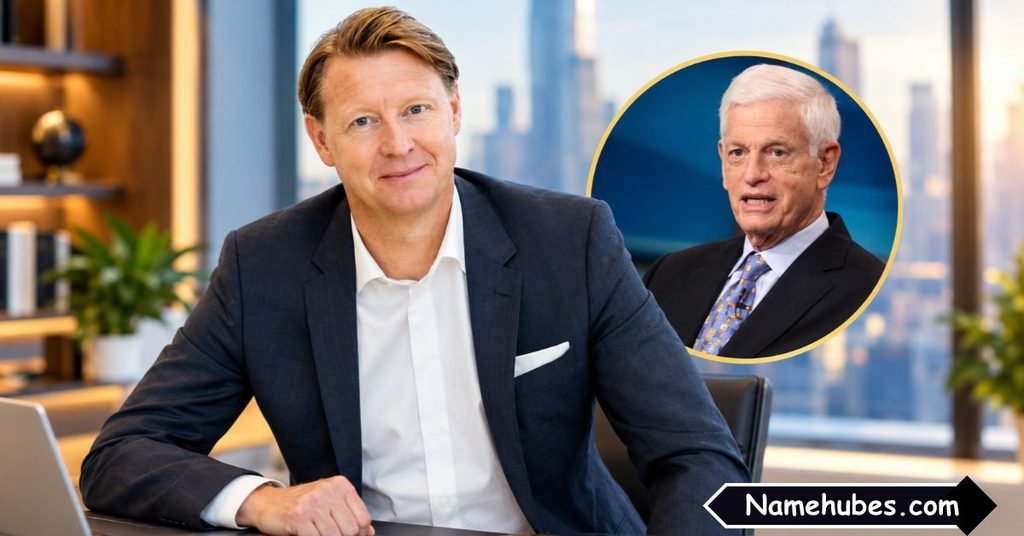
Vestberg and Gabelli are often compared because both careers show how major business decisions depend on careful evaluation. Their fields, responsibilities, and daily work differ considerably, however, so the comparison works best when each career is examined on its own terms.
Telecommunications Leadership Versus Investment Management
The table below outlines the main differences between the two careers.
| Aspect | Hans Vestberg | Mario Gabelli |
| Primary field | Telecommunications | Investment management |
| Core responsibility | Operating and transforming large networks | Analyzing companies and estimating value |
| Key organizations | Ericsson and Verizon | Gabelli & Company and GAMCO Investors |
| Central focus | Network infrastructure, technology development, and customer services | Fundamental research, valuation, and catalysts |
| Main type of decision | Infrastructure spending and strategic execution | Investment choices based on company value |
Business Achievements and Professional Strategies
The following points summarize how each man approached his work and what his career emphasized.
- Vestberg’s career emphasized technology leadership, network expansion, and organizational execution across international markets.
- Gabelli’s career emphasized independent analysis, company valuation, and patience in waiting for market prices to reflect value.
- Vestberg’s strategic focus was on long-term infrastructure development in a fast-changing industry.
- Gabelli’s strategic focus was on identifying undervalued businesses and understanding what could drive their value higher.
These approaches reflect different positions in the business world. An executive has to make decisions that shape a company’s future, while an investor has to decide whether the company’s future is already reflected in its price.
Was Hans Vestberg a Good CEO of Verizon?
Judging any chief executive depends on the criteria used, including financial results, strategic choices, competitive position, and the company’s condition when the executive took over. The sections below examine the decisions and challenges associated with his tenure so readers can form their own assessment.
Leadership Decisions and Business Performance
Vestberg’s leadership at Verizon centered on investment in networks and a push toward 5G and broadband services. These priorities reflected the industry’s shift toward faster wireless connections and more data-intensive customer demand. The company also made notable portfolio changes during this period, including the sale of its Yahoo and AOL media businesses, which moved Verizon further away from consumer media and toward its core connectivity operations. Later, the company agreed to acquire Frontier Communications, a move intended to expand its fiber broadband footprint.
Evaluating business performance requires comparing revenue growth, profitability, customer metrics, and shareholder returns against competitors over the full period of his leadership. Those figures are available in Verizon’s annual reports and filings with the U.S. Securities and Exchange Commission, and independent analysts publish their own assessments. Readers should consult those sources directly, because a fair judgment depends on the complete record rather than on a single decision.
Innovation, Strategy, and Key Challenges
Verizon faced several structural challenges during this period. The U.S. wireless market is highly competitive, with major carriers competing on coverage, pricing, device promotions, and network performance. Building 5G infrastructure required heavy capital expenditure, and the returns on that spending depend on customer adoption and the ability to offer services that justify higher revenue per customer.
Broadband competition presented a parallel challenge. Fiber networks require large investments in construction and rights of way, and cable providers and fixed wireless services compete directly for home internet customers. Vestberg’s strategy addressed these pressures by pairing network investment with broader digital services, but the effectiveness of that strategy depends on how well Verizon converted network improvements into lasting customer and revenue growth.
How Much Does Hans Vestberg Earn at Verizon?
Executive pay at a public company is shaped by its board, its performance targets, and the terms of each executive’s agreement. Specific compensation figures change from year to year, so this section explains the structure rather than presenting numbers that may be out of date.
Salary, Bonuses, and Executive Compensation
Chief executive compensation at large U.S. public companies usually includes three main parts: a base salary, an annual cash bonus tied to performance goals, and long-term equity awards such as stock or stock options that vest over several years. Some packages also include retirement benefits, perquisites, or severance terms, depending on the company’s policies.
Verizon discloses executive compensation in its annual proxy statement, which is filed with the Securities and Exchange Commission. That document lists the pay of named executive officers, explains how performance metrics were set, and describes any changes after an executive leaves a role. Anyone seeking exact figures for Vestberg’s compensation should review those filings for the relevant years, since amounts vary and the source material available for this article does not provide verified totals.
Verizon’s Network Position and Competition With AT&T
Verizon is one of the three largest wireless carriers in the United States, alongside AT&T and T-Mobile. Its position depends on the strength of its network, the scale of its customer base, and its ability to offer both mobile and home internet services.
Verizon’s Strengths and Competitive Challenges
Verizon’s main strengths include a large wireless customer base, an extensive network footprint, and a long history of investment in spectrum and infrastructure. Its broadband offerings, including fiber service in parts of its territory and fixed wireless internet for homes, allow it to compete for household customers as well as mobile subscribers. Those assets give the company a foundation for bundled services, which many customers value.
The challenges are equally clear. Wireless competition is intense, and carriers often compete on promotions that put pressure on pricing and margins. Customer retention, or churn, is a constant concern, and network investment must keep pace with rising data demand. Verizon also has to balance dividend commitments and debt levels with the spending needed to remain competitive.
How Verizon Compares With AT&T
AT&T is Verizon’s closest rival in both wireless and fixed-line services. Both companies operate national networks and serve large business and consumer markets, so their strategies often run in parallel. The main differences tend to lie in how each company prioritizes fiber buildouts, spectrum use, and bundled offerings.
AT&T has placed significant emphasis on fiber broadband as a central part of its strategy, while Verizon has combined its fiber assets with fixed wireless internet and its large mobile base. Comparing the two requires looking at network coverage and speed tests, customer satisfaction data, pricing, and financial results over multiple years. Those comparisons change over time, so readers should consult recent independent network assessments and company disclosures before drawing conclusions.
What Investors Can Learn From Mario Gabelli
Gabelli’s career offers practical lessons for investors, particularly those interested in value-oriented analysis. His approach centers on understanding a business before deciding whether its price is attractive.
Evaluating Intrinsic Business Value
Intrinsic value is an estimate of what a business is worth based on its assets, earnings potential, and competitive position. Investors who follow this approach usually examine several areas before making a decision. The following list outlines the factors that value-focused investors commonly review.
- Company financial statements, including revenue trends, margins, and cash flow.
- Competitive advantages that protect the business from rivals over time.
- Debt levels and the company’s ability to meet its obligations.
- Industry conditions that affect demand, pricing, and regulation.
A stock that looks inexpensive is not automatically a good investment. If the business is losing its competitive position or its industry is weakening, a low price may reflect real problems rather than an opportunity.
| Also Read This Celebs |
| Denika Kisty: Her Life, Career, and Marriage to Jason Williams |
| Symone Sanders Net Worth 2026: How She Makes Her Money |
| Harvey Steinberg Net Worth: What His Legal Career Reveals |
Fundamental Research and Long-Term Investing
Fundamental research is the process of studying a company’s operations, financial health, and strategic position rather than relying on market sentiment. Gabelli’s philosophy places weight on this kind of analysis, which can take time to reveal value that the market has not yet recognized. Patience is therefore a central part of his approach, since prices may remain below estimated value for extended periods.
Individual investors can apply these principles by researching businesses carefully, understanding the risks involved, and matching their decisions to their own investment horizon. Diversification also remains important, because even well-researched investments can perform poorly. No strategy guarantees profits, and investors should consider their own financial circumstances before acting.
What Connects Hans Vestberg and Mario Gabelli?
Vestberg and Gabelli are connected mainly by the way their careers illustrate two different sides of business decision-making. The connection is conceptual rather than documented through a known working relationship.
Publicly Documented Business Relationships
The available material does not establish a direct business partnership, shared company, or formal working relationship between Vestberg and Gabelli. Their names appear together because their careers offer useful contrasts: one in building and operating large telecommunications networks, the other in analyzing companies and managing investments. Readers should be cautious about any claim of a closer connection unless it is supported by verified public records.
Shared Lessons in Strategy and Capital Allocation
Both careers highlight the importance of allocating capital carefully. Corporate executives decide how much to invest in infrastructure, technology, and growth, while investors decide whether a company’s potential justifies its market price. Each decision involves weighing risk against expected return.
This shared focus makes their careers useful for readers who want to understand the link between corporate strategy and financial performance. Long-term competitiveness depends on sound investment decisions inside a company, and investment analysis depends on understanding how those decisions will play out over time.
Frequently Asked Questions About Hans Vestberg and Mario Gabelli
Who is Hans Vestberg?
Hans Vestberg is a Swedish business executive known for his leadership at Ericsson and Verizon. He joined Ericsson in 1991, later became its chief executive, and then led Verizon as chief executive from 2018 until he stepped down. His time at Verizon focused on network investment, 5G strategy, and broadband development.
Who is Mario Gabelli?
Mario Gabelli is an American investor and business leader who founded Gabelli & Company in 1976 and established GAMCO Investors in 1977. He is known for value investing, fundamental company research, and the Private Market Value with a Catalyst methodology, which considers the potential worth of a business to strategic buyers.
Are Hans Vestberg and Mario Gabelli business partners?
The material available for this article does not establish a direct business partnership between them. They are discussed together because their careers offer distinct perspectives on business leadership, one in technology and operations and the other in financial analysis and investment management.
What can business leaders learn from their careers?
Vestberg’s career shows the value of investing in technology and infrastructure with clear strategic goals, while Gabelli’s career shows the value of disciplined analysis before committing resources. Business leaders can apply both lessons by pairing innovation with financial awareness, evaluating the returns on major investments, and adapting proven principles to the circumstances of their own organizations rather than assuming one strategy suits every situation.
What can investors learn from Mario Gabelli’s investment approach?
Investors can learn to research a company’s fundamentals before buying its shares, to consider what a business might be worth beyond its current price, and to be patient while the market recognizes value. Gabelli’s approach also highlights the need for diversification and risk assessment, since no method guarantees results. Investors should make decisions based on their own research and financial situation.
Conclusion
Hans Vestberg and Mario Gabelli built influential American business careers in different fields. Vestberg rose through Ericsson, became its chief executive, and later led Verizon, where he focused on network investment, 5G, and broadband. Gabelli founded Gabelli & Company in 1976 and GAMCO Investors in 1977, becoming known for value investing and fundamental research.
Their careers are discussed together, but no verified business partnership between them is publicly documented. Their careers contrast sharply: one shows how technology and infrastructure decisions shape a company’s future, while the other shows how careful analysis of value guides investment choices. Both highlight the value of sound judgment in business.
