


Hiroshi Mikitani and Henrik Fisker both turned bold ideas into global ventures. Mikitani founded Rakuten and grew it into an internet-services group that spans e-commerce, fintech, and mobile. Fisker designed the BMW Z8 and Aston Martin DB9, then launched electric-vehicle companies. No reliable record shows a partnership, shared company, or family tie between them.
The link is a comparison of two very different paths. One man built a business ecosystem. The other chased design-led product innovation, and both of his car companies ended up in Chapter 11. In 2026, Mikitani still runs Rakuten, while Fisker works as a designer and entrepreneur.
Mikitani is a Japanese entrepreneur who founded Rakuten in 1997 and still leads it as chairman, president, and CEO in 2026. Henrik Fisker is a Danish automotive designer behind the BMW Z8, Aston Martin DB9, and V8 Vantage. He later founded Fisker Automotive and Fisker Inc. Fisker Automotive entered Chapter 11 in 2013, and Fisker Inc. followed in June 2024.
Public records show no major partnership or family link between the two men. Their stories matter because they show two routes to innovation: a platform built from many services, and a product built from design talent. Both paths carry real risk. Execution, capital, and timing decide who wins.
Hiroshi Mikitani and Henrik Fisker: Quick Facts
| Detail | Hiroshi Mikitani | Henrik Fisker |
| Born | March 11, 1965 | August 10, 1963 |
| Birthplace | Kobe, Japan | Allerød, Denmark |
| Nationality | Japanese | Danish |
| Education | Hitotsubashi University; Harvard Business School | ArtCenter College of Design |
| Main field | Technology, e-commerce, fintech | Automotive design, mobility, EVs |
| Best known for | Founding Rakuten | Designing luxury cars and founding Fisker companies |
| Major companies | Rakuten, Crimson Group | Fisker Automotive, Fisker Inc., HF Design |
| 2026 status | Chairman, President and CEO of Rakuten Group | Automotive designer and entrepreneur |
Who Are Hiroshi Mikitani and Henrik Fisker?
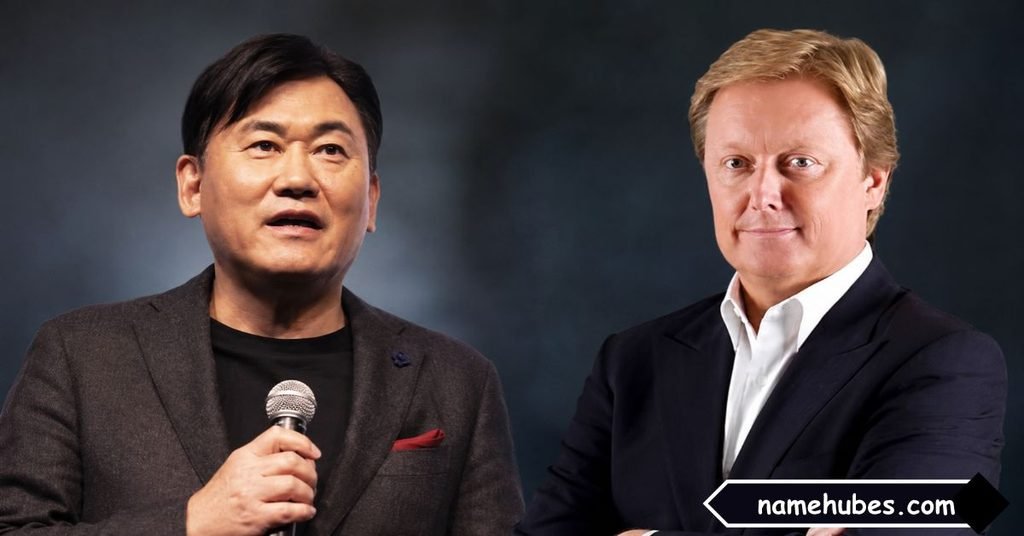
Think of them as builders from two different workshops. Mikitani built a digital marketplace and then stacked dozens of services on top of it. Fisker sketched cars first, then tried to build companies around his designs. Each man wanted to create something global. Each one took a road the other never walked.
The names appear together online because people often search for two famous entrepreneurs at once. Some expect a hidden partnership. The records don’t back that up. What you find instead is a useful contrast between a technology founder and a design-led founder.
Hiroshi Mikitani: Early Life, Education, and Background
Hiroshi Mikitani was born in Kobe, Japan, on March 11, 1965. He studied at Hitotsubashi University, a Tokyo school known for business and economics. After graduating, he joined the Industrial Bank of Japan in 1988. That bank was one of the country’s major lenders, and it gave him a front-row seat to how money and companies move.
Then came Harvard Business School. Mikitani earned his MBA there in 1993. Studying in the United States changed how he thought about entrepreneurship. He began to see building a company as a real option, not something other people did.
The 1995 Kobe earthquake pushed him further. His hometown suffered huge damage. In an interview kept by Harvard Business School alumni, Mikitani described that destruction as a reason he wanted to help revive Japan’s economy. For many founders, a spark like that decides everything.
Henrik Fisker: Early Life, Education, and Design Interests
Henrik Fisker was born on August 10, 1963, in Allerød, Denmark. Cars fascinated him from an early age. That interest slowly turned into a career plan, and it led him to formal design training.
He studied at the ArtCenter College of Design, a school in Pasadena, California, famous for producing car designers. His degree was a Bachelor of Science in Automotive Design, according to SEC filings. Those filings also trace his senior roles across the industry.
His training gave him a path through BMW, Ford, and Aston Martin before he started his own ventures. Fisker’s wife, Dr. Geeta Gupta-Fisker, later became his business partner. The couple co-founded the modern Fisker company, and she held senior financial and operating roles there.
Hiroshi Mikitani’s Career and Rise With Rakuten
Mikitani’s career is really the story of one idea that kept growing. He started small, with an online store. He ended up leading a business group that touches shopping, banking, travel, and phone service. Few founders stretch a single concept that far.
Founding Rakuten and Building a Global Business
After leaving banking, Mikitani set up Crimson Group. He then founded Rakuten in February 1997. The name carries a sense of optimism, which fits a startup built during the early days of the Japanese internet.
Rakuten Ichiba, the company’s online marketplace, launched in May 1997. It worked like a digital shopping mall where many sellers could rent space and reach customers. Rakuten went public in 2000, which gave the company money to grow faster.
Here is how the early timeline looks, step by step:
- February 1997: Mikitani founds Rakuten after setting up Crimson Group.
- May 1997: Rakuten Ichiba opens as an online marketplace.
- 2000: Rakuten goes public.
- Later years: the company expands into travel, content, banking, securities, credit cards, payments, and mobile services.
That last step changed everything. Rakuten stopped being only a shop and became a business ecosystem. The company now describes more than 70 businesses under its umbrella. Imagine a customer who shops on the marketplace, pays with a Rakuten card, books a trip, and uses Rakuten mobile service. Each piece feeds the others. That is the heart of his strategy.
His Leadership Role and Business Achievements
Mikitani’s biggest achievement is the creation of Rakuten itself. He took a small Japanese internet venture and grew it into a global internet-services group. Rakuten’s official management information dated April 1, 2026, lists him as Representative Director, Chairman, President and CEO.
His influence reaches past commerce. Rakuten has moved into mobile communications, fintech, sports, entertainment, and healthcare technology. That wide footprint makes Mikitani more than an e-commerce executive. He works as a platform and ecosystem builder.
Rakuten reported 29,419 consolidated employees as of December 31, 2025. The company is still reshaping itself too. In 2026, it announced that a fintech reorganization should take effect in October 2026, pending approvals and other conditions. Leaders who stay hands-on at that scale rarely coast.
His honors include the Harvard Business School Alumni Achievement Award and France’s Legion of Honour. Those awards show how far his reputation has traveled beyond Japan.
Henrik Fisker’s Automotive Design Career and Business Ventures
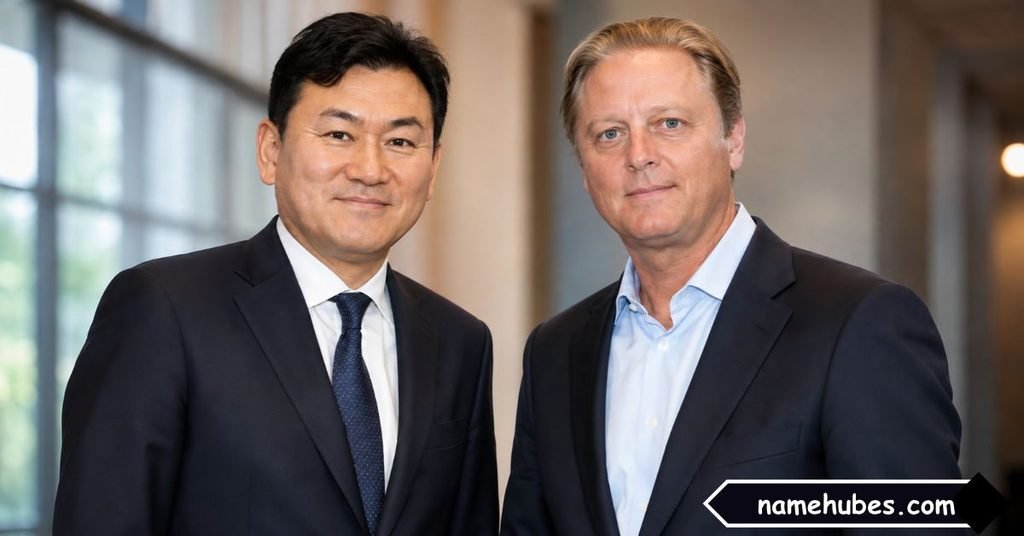
Fisker’s career runs on a different engine. He sketches first and builds companies second. His path moves from big car brands to his own labels, and the results are a mix of famous designs and costly setbacks.
Notable Car Designs and Contributions to the Auto Industry
Fisker worked at BMW in the late 1990s. He became linked with the design development that led to the BMW Z8, a stylish roadster that many collectors still admire. He also spent time at Ford, according to SEC filings.
Later he joined Aston Martin, where he served as Design Director. There he worked on vehicles including the Aston Martin DB9 and the V8 Vantage. Both cars helped define the look of modern British luxury cars.
Here are the vehicles most often tied to his design career:
- BMW Z8, a roadster developed during his BMW years
- Aston Martin DB9, a flagship grand tourer
- Aston Martin V8 Vantage, a sportier model in the same family
- Fisker Karma, a luxury plug-in hybrid from his own company
- Fisker Ocean, an electric SUV from Fisker Inc.
His real contribution to the automotive industry is a belief that premium design and electrification can go together. He pushed that idea early, back when many luxury buyers still saw electric cars as plain commuter vehicles.
Founding Fisker Automotive and Fisker Inc.
In 2005, Fisker moved toward entrepreneurship with Fisker Coachbuild. That firm focused on custom bodywork for high-end cars. Two years later, in 2007, he co-founded Fisker Automotive.
That company produced the Fisker Karma, a luxury plug-in hybrid. It stood out as one of the first high-profile attempts to mix premium design with electric power. Fisker Automotive later hit severe financial and production trouble. It filed for Chapter 11 in 2013, after Fisker had already left his executive chairman role. Its assets were later bought by the Chinese company Wanxiang, which relaunched the business as Karma Automotive.
Fisker came back. He co-founded Fisker Inc. in 2016 with Geeta Gupta-Fisker. The new company built the Fisker Ocean electric SUV. It also followed an asset-light model, which means it leaned on outside manufacturers and technology partners instead of owning big factories. The idea sounded smart on paper. In practice, it left the company dependent on other firms to deliver.
What Happened to Henrik Fisker and Fisker Inc.?
You can think of Fisker Inc. as a promising idea that ran out of runway. The company had a strong product concept and a famous designer. It still struggled with money and production. Many electric-vehicle startups have faced the same squeeze.
Fisker Inc.’s Financial Difficulties and Bankruptcy
Fisker’s U.S. entities filed for Chapter 11 protection in June 2024. Chapter 11 is a type of U.S. bankruptcy that lets a company keep operating while a court supervises a restructuring or sale of its assets. It doesn’t always mean the business disappears right away.
Reuters reported estimated assets of $500 million to $1 billion against liabilities of $1 billion to $10 billion at filing time. That gap tells you how deep the trouble ran. The company owed far more than it owned.
Why did it happen? The record points to financing and operational problems. An asset-light model needs steady cash and reliable partners. Without both, scaling a vehicle company gets very hard. Financing, production, and scaling are the real hurdles in this industry, and Fisker Inc. ran into all three.
Who Owns Fisker Following the Bankruptcy?
No single owner holds the old Fisker Inc. the way it once stood. The bankruptcy proceedings broke the business into parts. In general, assets in a Chapter 11 case get sold to different buyers, including vehicle inventory, intellectual property, and equipment. Reports from the case noted that a fleet-leasing company bought a large share of the unsold Fisker Ocean SUVs.
Because the situation can change with court orders and later deals, you should check current filings or recent news before treating any ownership claim as final. What’s clear is that Henrik Fisker no longer controls the former operating structure of Fisker Inc. His central asset today is his design reputation, not a car factory.
What Is Henrik Fisker Doing Today?
Fisker’s name still carries weight in car design. He remains an automotive designer and entrepreneur, and HF Design is one of the companies tied to his name. His future work will likely draw on the same strengths that built his reputation: product vision, styling, and brand building.
Claims about a brand-new Fisker venture deserve caution. Unless a new announcement comes from an authoritative source, treat rumors as rumors. Many designers return after a setback. Some launch fresh ventures. Others consult or work on smaller projects. Fisker’s direction in 2026 isn’t confirmed by strong public sources, so a careful reader should wait for official news.
Hiroshi Mikitani and Henrik Fisker: Connection and Comparison
Why do people search for these two together? Often it’s curiosity. Both men are famous founders from different industries, and their names pop up in lists about innovation and global ambition. Comparing them reveals a lot about how entrepreneurship really works.
Are Hiroshi Mikitani and Henrik Fisker Related?
No. Reliable public records show no family relationship between them. They also don’t share a company, and there is no well-established major business partnership between the two. If you saw a claim that links them as relatives or partners, treat it as unsupported.
Their paths simply run in parallel. Mikitani built technology platforms in Japan. Fisker designed cars in Europe and the United States. Their worlds rarely touched.
Comparing Their Business Strategies and Entrepreneurial Journeys
| Area | Hiroshi Mikitani | Henrik Fisker |
| Core expertise | Digital business and corporate strategy | Automotive design and product vision |
| Signature creation | Rakuten ecosystem | High-profile cars and EV ventures |
| Industry | Internet services and fintech | Automotive and electric mobility |
| Entrepreneurial model | Diversification and ecosystem expansion | Design-led product innovation |
| Major challenge | Managing a diversified global group | Financing, production, and scaling vehicle companies |
| Also Read This Celebs |
| Pedro Pizarro and James Quincey: Business Careers in 2026 |
| Peter Orszag Biography: Age, Career, Net Worth and More |
| Jerry Speyer and Robert De Niro: Career, Background and NYC |
Hiroshi Mikitani and Henrik Fisker Net Worth in 2026
Net worth figures for public figures often travel fast and get sloppy. Reliable 2026 numbers for both men are hard to confirm from primary sources. Private assets, shareholdings, debts, and market swings can all change a valuation. Treat any exact dollar figure as an estimate unless a current, strong source backs it up.
Hiroshi Mikitani’s Wealth and Income Sources
Financial publications widely describe Mikitani as a billionaire. Much of that wealth has historically come from his ownership and interests in Rakuten and related holdings. Still, a precise 2026 figure is an estimate. It isn’t a confirmed personal financial statement.
His income sources center on executive leadership, ownership and investment interests, and the wider Rakuten ecosystem. Rakuten’s official disclosures show he remains a major shareholder and the group’s chairman and CEO. That combination of executive role and ownership interests explains where his wealth comes from.
Henrik Fisker’s Estimated Net Worth and Financial Position
Fisker’s current net worth is even harder to pin down. His companies have gone through big financial swings, including the 2024 Fisker Inc. bankruptcy proceedings. Online dollar figures often ignore those swings.
His income has historically come from executive leadership, design work, entrepreneurship, and ownership interests in automotive businesses. SEC filings documented his compensation and equity arrangements at Fisker Inc. Those numbers describe the past, so don’t read them as his 2026 income. Without a strong, current source, any exact net worth claim for him is speculation.
Hiroshi Mikitani’s Personal Life and Current Role at Rakuten
Mikitani keeps a fairly private personal life. He married Haruko Mikitani in 1993. Public biographical sources report that the couple has two children. His wife also helped in the early development of Rakuten’s operations, which shows how personal and professional life overlapped in the company’s first years.
His public profile centers on business, technology, sports, culture, and philanthropy. He has held leadership positions linked to sports, culture, telecommunications, and healthcare technology. That range shows a leader who sees Rakuten as part of a larger social and economic picture.
His current role is clear. Rakuten’s official management information dated April 1, 2026, lists him as Representative Director, Chairman, President and CEO. The company keeps reorganizing parts of its fintech business, which suggests he stays closely tied to major strategic decisions. For Rakuten’s future in 2026, expect continued change across internet services, mobile, and financial businesses.
Frequently Asked Questions
What Is Hiroshi Mikitani Best Known For?
He is best known as the founder and longtime leader of Rakuten. The company grew from an online marketplace into a diversified global internet-services group. His 2026 title is Chairman, President and CEO.
Is Hiroshi Mikitani Still Leading Rakuten in 2026?
Yes. Rakuten’s official management information dated April 1, 2026, lists him as Representative Director, Chairman, President and CEO. He remains involved in major decisions, including the fintech reorganization planned for October 2026.
What Cars Did Henrik Fisker Design?
His design credits include the BMW Z8 and major Aston Martin models such as the DB9 and V8 Vantage. He also led the design vision behind the Fisker Karma and the Fisker Ocean.
What Is Henrik Fisker’s Net Worth?
No confirmed 2026 figure exists. His companies faced major financial trouble, including the 2024 Fisker Inc. bankruptcy, so online estimates deserve caution and should not be treated as verified wealth.
Can Henrik Fisker Start Another Automotive Company?
Nothing legally stops him, and he still holds strong design credentials. However, no authoritative announcement confirms a new automotive company, so treat reports of one as unverified until official news appears.
Conclusion
Hiroshi Mikitani and Henrik Fisker never shared a company, a partnership, or a family tie. Their stories still pair well. Mikitani founded Rakuten in 1997 and grew it into a business ecosystem of more than 70 companies. In 2026, he still leads it as chairman, president, and CEO.
Fisker designed the BMW Z8 and Aston Martin DB9, then launched Fisker Automotive and Fisker Inc. Both companies ended in Chapter 11 bankruptcy. One man spread risk across many connected services. The other bet on one product at a time. The lesson is simple: great ideas still need capital, execution, and good timing.
