
Baby names come and go, but some names just don’t fade the way trends do.
Old English names carry that kind of staying power, and there’s a good reason for it.
These names come from a time when every name meant something real, whether it pointed to strength, peace, or a place someone called home.
In this piece, you’ll find a full list of Old English boy names, girl names, unisex options, and names paired with their meanings, plus real tips on picking one that fits your family.
By the end, you’ll walk away with more than a list.
You’ll understand where these names came from and how to make one your own.
What Are Old English Names, Really?
Old English names come from the language spoken in early England, roughly between the 5th and 11th centuries.
This was the era of Anglo-Saxon settlers, when English as we know it was still taking shape from Germanic roots.
Names during this period weren’t picked because they sounded pretty.
Each one was built from small word pieces, called elements, that stood for things like protection, wealth, or nature.
Put two of those elements together and you’d get a name with a built-in story.
That’s part of why early English names still feel so grounded compared to some modern trends that lean on sound alone.
Also Read : Vintage Baby Names: Classic, Unique & Old-Fashioned Ideas
A Peek Into Anglo-Saxon Naming Traditions
Families in Anglo-Saxon England often named children using elements passed down from parents or grandparents.
A father named Edwin might have a son named Edgar, sharing the first part of the name as a kind of family signature.
Names also reflected daily life and belief.
Words for battle, guardianship, and nature all made their way into names because those things mattered to people at the time.
This is why so many Anglo-Saxon names sound strong or nature-inspired even now.
They weren’t invented to impress anyone.
They were built from the world people actually lived in.
Old English Boy Names
Here are 14 boy names with real roots in early England, each one carrying its own bit of history.
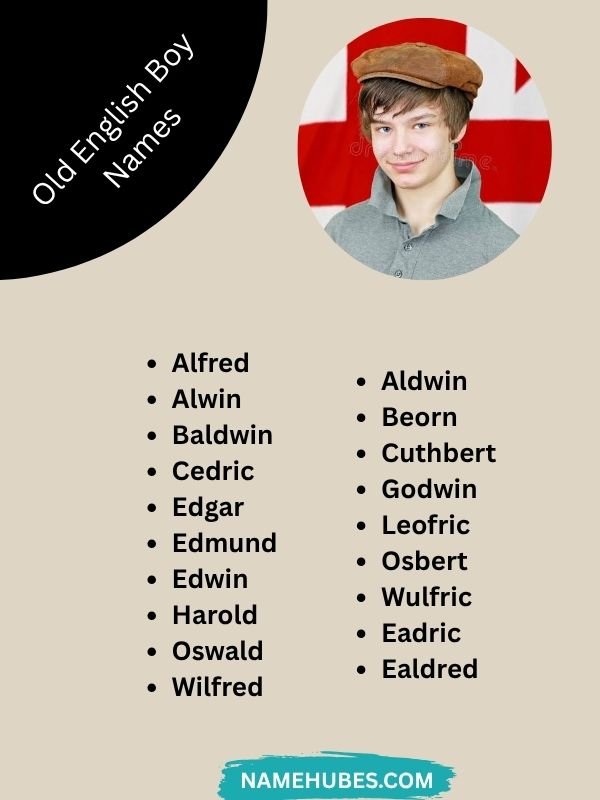
- Alfred – wise counselor
- Edmund – protector of wealth
- Edwin – wealthy friend
- Harold – army ruler
- Oswald – power of God
- Wilfred – desiring peace
- Edgar – wealthy spear
- Godric – ruler by God
- Cedric – kindly ruler
- Edric – wealthy ruler
- Winston – joy stone or friend’s town
- Stanley – stony meadow
- Edward – wealthy guardian
- Albert – noble and bright
Any one of these works well if you want a name that sounds classic without sounding stiff.
Also Read : Badass Princess Names: 120+ Bold & Beautiful Names for Girls
Old English Girl Names
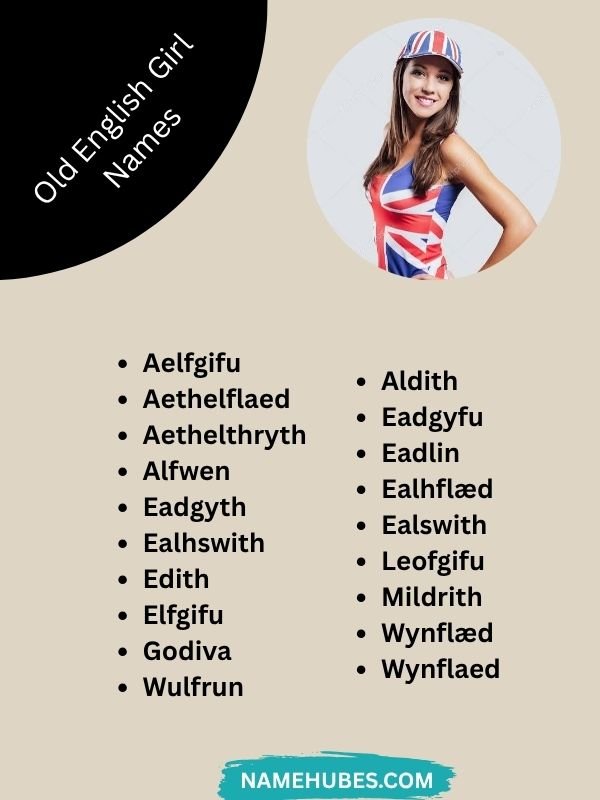
These 14 girl names lean into the softer, nature-connected side of Old English naming.
| Name | Meaning |
| Edith | Prosperous in war |
| Audrey | Noble strength |
| Mildred | Gentle strength |
| Ethel | Noble |
| Hilda | Battle |
| Matilda | Strength in battle |
| Winifred | Peace and joy |
| Mabel | Lovable |
| Goldie | Golden |
| Elvina | Elf friend |
| Florence | Flourishing |
| Hazel | Hazel tree |
| Ivy | The ivy plant |
| Edwina | Wealthy friend |
A lot of these have quietly made a comeback in recent years, and it’s easy to see why once you know what they mean.
Old English Unisex Names
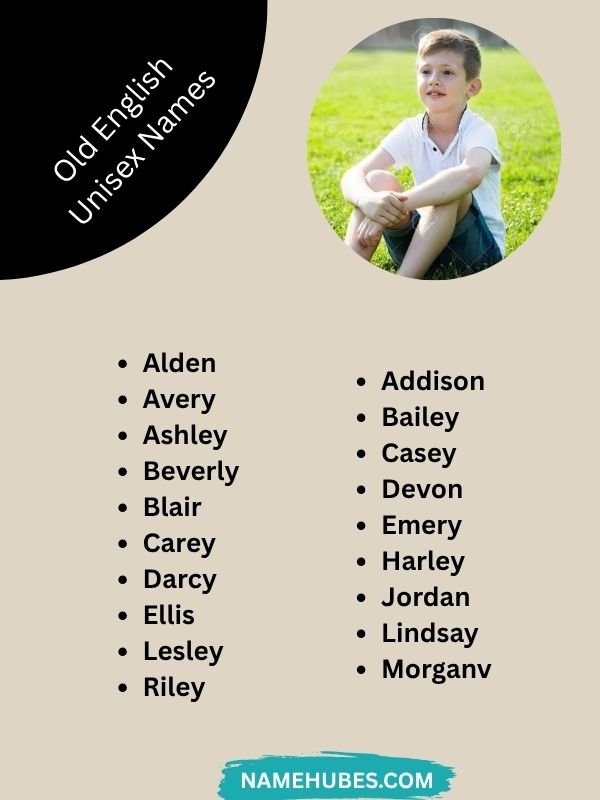
Old English also gave us a batch of names that work equally well for any child, many of them borrowed from English place names.
- Ashley – ash tree meadow
- Harley – hare’s meadow
- Bailey – bailiff or fortification
- Avery – elf ruler
- Oakley – oak tree meadow
- Riley – rye clearing
- Presley – priest’s meadow
- Beverly – beaver stream
- Leslie – garden of holly
- Whitney – white island
- Kendall – valley of the river Kent
- Shirley – bright clearing
- Sydney – wide meadow
- Lindsey – island of linden trees
Notice how many of these tie back to land and nature.
That’s a pattern you’ll see again and again in British naming traditions.
Also Read :170+ Boyish Nicknames for Girls: Cute, Cool, Unique and Funny Names
Old English Names With Meanings
If you want a name where the meaning does most of the talking, these 14 fit the bill.
| Name | Meaning |
| Oswin | Divine friend |
| Aldwin | Noble friend |
| Godwin | Friend of God |
| Leofric | Beloved ruler |
| Wulfric | Wolf ruler |
| Eadwig | Blessed in war |
| Beornwulf | Warrior wolf |
| Cynewulf | Royal wolf |
| Osgar | Divine spear |
| Wynflaed | Joyful beauty |
| Aelfwine | Elf friend |
| Ceolwulf | Ship’s wolf |
| Aescwig | Ash spear |
| E |
These names read almost like tiny poems once you break down the pieces.
That’s the beauty of names with clear meaning instead of names chosen for sound alone.
How to Pick the Right Old English Name
Picking one of these names doesn’t have to be complicated.
Start by deciding what quality matters most to you, whether that’s strength, peace, nature, or protection.
From there, narrow your list to names that carry that theme.
- Say the name out loud with your last name to check the flow
- Look up the full meaning, not just a shortened version
- Ask family members for their honest first reaction
- Check that the nickname options actually feel right to you
A name you’ll say a thousand times a day should feel natural in your mouth, not just good on paper.
Tips to Personalize an Old English Name
You don’t have to use these names exactly as listed.
Old English names bend well into modern spellings and nicknames.
- Swap traditional spellings for softer modern versions, like Aldwyn instead of Aldwin
- Use an Old English name as a middle name if the full name feels heavy
- Pair a strong meaning name with a lighter, simpler middle name
- Borrow the meaning, not the name, and search for a modern name with the same root idea
This gives you the heritage and the meaning without losing your own personal touch.
When an Old English Name Fits Best
Some families lean into these names for a specific reason, and it helps to know if that reason applies to you.
Old English names tend to work best if you want a name tied to English history or British history, if you’re drawn to nature-based meanings, or if you want a name that feels timeless rather than trendy.
They’re also a strong pick for families building a naming pattern across generations, since so many of these names share root elements that connect naturally to each other.
Final Thoughts
Old English names carry something a lot of modern name lists don’t, which is a real story behind every letter.
Whether you’re drawn to the strength behind Wulfric, the softness of Ivy, or the balance of a unisex pick like Bailey, there’s a name here that fits almost any family.
Take your time with the list, say the names out loud, and picture actually calling that name across a room for the next eighteen years.
That’s really the best test of all.
Which name from this list caught your eye first? Drop it in the comments below.
Frequently Asked Questions
What are Old English names?
Old English names come from the language spoken in early England between the 5th and 11th centuries, often built from word elements that carried real meaning.
Are Old English names still used today?
Yes, many have stayed popular, including names like Edward, Edith, and Alfred, while others have made a quiet comeback in recent years.
What is the most popular Old English name right now?
Edward and Edith remain among the most recognized and widely used Old English names today.
Do all Old English names have deep meanings?
Most do, since names were typically built from elements representing things like strength, peace, or nature rather than chosen for sound alone.
Can Old English names work for a modern baby?
Absolutely. Many parents pair a traditional Old English name with a modern spelling or use it as a middle name for a softer feel.
What is the difference between Old English and Anglo-Saxon names?
The terms are closely linked, since Anglo-Saxon settlers spoke Old English, so most Anglo-Saxon names and Old English names come from the same source.
How do I choose the right Old English name for my child?
Pick a meaning that matters to you first, then test the full name out loud with your last name before deciding.
