

Finding the perfect Polish girl names can be exciting, especially when you want a name that reflects beauty, tradition, and meaning. Polish names are known for their rich cultural heritage, elegant pronunciation, and timeless appeal. Whether you’re expecting a baby, researching your Polish ancestry, or simply looking for unique name ideas, this collection of 190+ Best Polish Girl Names With Meanings & Origins offers a wide variety of classic, modern, and rare choices to inspire you.
Every name in this guide includes its meaning and origin, making it easier to choose one that matches your preferences and values. From popular favorites and traditional gems to unique and modern Polish names, you’ll discover meaningful options for every style. Explore this carefully curated list of the best Polish girl names and find the perfect name that celebrates Poland’s rich history while remaining beautiful for generations to come.
Why Choose a Polish Girl Name?
Polish girl names are known for their rich history, beautiful sounds, and meaningful origins. Many of these names have been passed down through generations, making them a wonderful choice for parents who want something classic yet unique.
What makes Polish girl names so special?
- Rich heritage: Many names have deep Slavic roots and reflect Poland’s history and culture.
- Beautiful sound: Soft endings like -a and -ia give these names an elegant and feminine feel.
- Meaningful origins: Many Polish names symbolize qualities such as wisdom, strength, peace, love, and grace.
- Timeless appeal: These names have remained popular for generations and never go out of style.
- Lovely nicknames: Most Polish girl names have sweet, affectionate short forms that are perfect for everyday use.
If you’re looking for a name that’s beautiful, meaningful, and connected to a rich cultural tradition, Polish girl names offer plenty of wonderful options to explore.
Most Popular Polish Girl Names
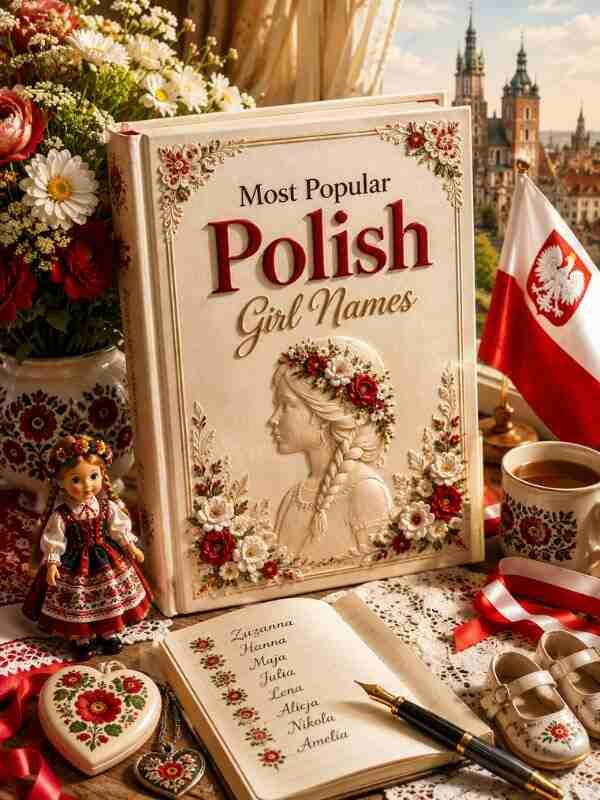
Poland’s most beloved names today blend old Slavic roots with names that have crossed into international popularity. These are the names you’ll hear most often on Polish playgrounds and school registers right now.
Zofia – Of Greek origin, meaning “wisdom.” Zofia has topped Polish naming charts for years and pairs beautifully with the nickname Zosia.
Julia – A Latin-rooted name meaning “youthful” or “downy-haired,” Julia has become a firm favorite across Poland thanks to its softness and international familiarity.
Maja – Linked to the Roman goddess Maia and associated with spring and growth, Maja is short, bright, and easy to say in almost any language.
Zuzanna – The Polish form of Susanna, meaning “lily,” Zuzanna carries an old-world charm while still sounding current. Zuzia is its most common nickname.
Hanna – A variant of Hannah, meaning “grace” or “favor,” Hanna feels timeless and gentle, fitting comfortably among both traditional and modern Polish girl names.
Lena – Originally a short form of Helena or Magdalena, meaning “light” or “bright one,” Lena now stands confidently as its own name.
Amelia – Meaning “work” or “industrious,” Amelia has spread widely through Poland in the last decade, admired for its soft, flowing sound.
Alicja – The Polish take on Alice, meaning “noble” or “of noble kind,” Alicja combines a classic feel with modern popularity.
Oliwia – The Polish spelling of Olivia, symbolically tied to the olive branch and peace, Oliwia has climbed steadily in popularity among young parents.
Emilia – Derived from a Roman family name meaning “rival” or “eager,” Emilia sounds graceful and pairs well with the nickname Ela.
Classic and Traditional Polish Girl Names
Traditional Polish girl names tend to reflect generations of Catholic naming customs, saints’ names, and old Slavic roots passed down through great-grandmothers. They carry a certain dignity that never really goes out of style.
Anna – Meaning “grace,” Anna is one of the most enduring names in Poland, worn by queens, grandmothers, and newborns alike across centuries.
Maria – The Polish form of Mary, meaning “beloved” or “bitter,” Maria remains deeply tied to religious tradition and is often used as a middle name.
Katarzyna – From the Greek for “pure,” Katarzyna is a formal, elegant name shortened affectionately to Kasia in daily life.
Barbara – Meaning “foreign woman” or “stranger,” Barbara has a stately, old-fashioned charm and is often softened to Basia among family.
Elżbieta – The Polish version of Elizabeth, meaning “God is my oath,” Elżbieta feels formal yet warm, especially as Ela or Elka.
Krystyna – Meaning “follower of Christ,” Krystyna was extremely common through much of the twentieth century and still carries a graceful, classic weight.
Jadwiga – An old Slavic-Germanic name meaning “war” and “refuge,” Jadwiga honors Poland’s medieval queen Saint Jadwiga and remains a name of quiet strength.
Teresa – Possibly meaning “harvester” or tied to the Greek island of Therasia, Teresa has long been associated with devotion, kindness, and steadiness.
Modern Polish Girl Names
Contemporary Polish parents are increasingly drawn to names that feel light, international, and easy to pronounce beyond Poland’s borders, while still keeping a distinctly Polish flavor.
Nikola – A feminine form of Nicholas, meaning “victory of the people,” Nikola sounds fresh and works well internationally.
Wiktoria – Meaning “victory,” Wiktoria has grown quickly in popularity thanks to its bold, confident sound.
Kalina – Referring to the viburnum shrub and its red berries, Kalina blends nature imagery with a soft, modern rhythm.
Milena – Meaning “gracious” or “dear,” Milena has a gentle, contemporary elegance that appeals to younger parents.
Laura – Meaning “laurel,” symbolizing victory and honor, Laura has settled comfortably into modern Polish naming trends.
Blanka – Derived from the word for “white,” Blanka feels crisp, minimal, and quietly stylish.
Vanessa – A literary invention popularized by Jonathan Swift, Vanessa has found a modern audience among Polish parents seeking something a little different.
Nina – Short, versatile, and possibly linked to Anna or Slavic roots meaning “grace,” Nina works beautifully as either a full name or nickname.
Unique and Rare Polish Girl Names
For parents hoping to avoid the most common names on any school roster, Poland’s older Slavic naming traditions offer plenty of striking, rarely used options.
Bogna – A shortened form of names beginning with “Bog” (God), Bogna feels ancient, soft, and rarely heard today.
Dobrawa – Meaning “good” and tied to a historical Polish princess, Dobrawa carries deep roots in early Polish royal history.
Wanda – Legendary as the name of a mythical Polish princess who refused to marry a foreign prince, Wanda has an air of independence and quiet defiance.
Ludmiła – Meaning “dear to the people,” Ludmiła is an old Slavic name with a warm, community-centered meaning.
Bronisława – Combining “to defend” and “glory,” Bronisława is a strong, old-fashioned name occasionally shortened to Bronka.
Świętosława – Meaning “holy glory,” this name belonged to an early medieval Polish princess and remains strikingly rare today.
Radosława – Meaning “joyful glory,” Radosława is uncommon but full of positive, uplifting meaning.
Beautiful Polish Girl Names
Some Polish girl names are chosen simply for how elegant they sound, regardless of era or trend. These names tend to roll softly off the tongue and feel timeless in almost any setting.
Aleksandra – Meaning “defender of the people,” Aleksandra is stately and versatile, often shortened to Ola.
Natalia – Linked to Christmas and the Latin word for “birth,” Natalia feels warm and celebratory.
Klaudia – Derived from a Roman family name meaning “lame” or “gentle,” Klaudia sounds smooth and refined in Polish.
Weronika – Meaning “true image,” Weronika has a graceful, almost cinematic quality to it.
Izabela – A Polish variation of Isabella, meaning “devoted to God,” Izabela feels romantic and classic at once.
Karolina – The feminine form of Karol (Charles), meaning “free man” or “strength,” Karolina sounds elegant while remaining easy to say.
Polish Girl Names With Beautiful Meanings
Beyond how they sound, many Polish girl names carry meanings that read almost like blessings — hope, love, peace, and joy built directly into the name itself.
Nadzieja – Meaning “hope,” Nadzieja is a direct, poetic name that doubles as a virtue.
Miłosława – Combining “love” and “glory,” Miłosława is a beautifully layered old Slavic name.
Bogumiła – Meaning “dear to God,” Bogumiła reflects deep religious devotion in its very structure.
Dobrosława – Meaning “good glory” or “glorified goodness,” Dobrosława pairs virtue with strength.
Wiesława – Meaning “known glory” or “famous glory,” Wiesława has a proud, dignified tone.
Kazimiera – Meaning “one who proclaims peace,” Kazimiera carries a gentle, diplomatic quality within its meaning.
Short Polish Girl Names and Nicknames
Polish naming culture loves diminutives, and many full names naturally shrink into cozy, affectionate short forms used at home. Some of these nicknames are so common they function almost like independent names.
Zosia – The beloved short form of Zofia, used constantly in everyday conversation.
Kasia – The everyday nickname for Katarzyna, warm and instantly recognizable across Poland.
Basia – The affectionate short form of Barbara, soft and friendly in tone.
Ania – The familiar diminutive of Anna, used from childhood well into adulthood.
Gosia – The common nickname for Małgorzata, easier to say than the full formal name.
Ola – A short, punchy nickname for Aleksandra, popular enough to sometimes stand alone.
Ewa – Already short on its own, meaning “life,” Ewa is simple, classic, and universally understood.
Polish Girl Names From Nature

Slavic naming traditions have always drawn heavily from the natural world, and Polish girl names are no exception. Flowers, berries, and trees show up again and again in this category.
Kalina – Named after the viburnum shrub with its bright red berries, symbolizing beauty tied closely to the land.
Jagoda – Meaning “berry,” Jagoda is playful, earthy, and distinctly Polish.
Malina – Meaning “raspberry,” Malina is sweet-sounding and closely tied to Polish orchards and countryside imagery.
Róża – The Polish word for “rose,” Róża is simple, floral, and instantly understood even outside Poland.
Lilia – Meaning “lily,” Lilia symbolizes purity and grace, echoing the flower’s traditional meaning.
Iwa – Referring to the willow tree, Iwa is short, unusual, and quietly poetic.
Polish Girl Names That Mean “Pure” or “Wise”
Wisdom and purity are recurring themes in Polish naming tradition, often borrowed originally from Greek roots but fully absorbed into Polish culture over centuries.
Zofia – Meaning “wisdom,” directly borrowed from the Greek “Sophia” and thoroughly Polish in everyday use today.
Agnieszka – From the Greek “hagne,” meaning “pure” or “chaste,” Agnieszka has been a staple Polish girl name for generations.
Świętosława – Meaning “holy glory,” this name links purity of spirit with honor and renown.
Mądrosława – A rare constructed-style name suggesting “wise glory,” reflecting the same wisdom theme found in Zofia, though far less commonly used today.
Polish Girl Names Easy to Pronounce
Not every Polish name is simple for non-Polish speakers, but plenty of Polish girl names transfer smoothly into English and other languages without losing their character.
Ania – Just two clean syllables, easy for English speakers to say correctly on the first try.
Ola – Short, phonetic, and nearly identical across multiple languages.
Ewa – Reads naturally in English as “Eva,” making it effortless internationally.
Lena – Already common in several European languages, Lena needs no adjustment at all.
Nina – Simple, symmetrical, and recognized well beyond Poland’s borders.
Mila – Meaning “gracious” or “dear,” Mila has become globally familiar and remains easy to pronounce everywhere.
Polish Girl Names and Meanings (A–Z)

For a quick overview, here’s a broader alphabetical look at Polish girl names, their origins, and their meanings.
Agnieszka – Greek origin, meaning “pure.”
Barbara – Greek origin, meaning “foreign woman.”
Cecylia – Latin origin, meaning “blind” or possibly “heavenly,” linked to Saint Cecilia.
Danuta – Uncertain Baltic-Slavic origin, meaning “given” or “gift.”
Elżbieta – Hebrew origin, meaning “God is my oath.”
Franciszka – Latin-Germanic origin, meaning “free one” or “from France.”
Grażyna – A literary Polish name meaning “graceful” or “beautiful,” popularized by poet Adam Mickiewicz.
Halina – Greek origin, meaning “calm” or related to the sea.
Irena – Greek origin, meaning “peace.”
Jadwiga – Germanic-Slavic origin, meaning “war” and “refuge.”
Kinga – Shortened Germanic-origin name meaning “brave” or “bold in battle.”
Lucyna – Latin origin, meaning “light.”
Małgorzata – Greek origin, meaning “pearl.”
Natalia – Latin origin, meaning “birth,” tied to Christmas.
Olga – Old Norse-Slavic origin, meaning “holy” or “blessed.”
Paulina – Latin origin, meaning “small” or “humble.”
Renata – Latin origin, meaning “reborn.”
Stanisława – Slavic origin, meaning “to become glorious.”
Teresa – Greek origin, possibly meaning “harvester.”
Urszula – Latin origin, meaning “little bear.”
Wanda – Legendary Slavic origin, meaning uncertain but tied to a mythical princess.
Zofia – Greek origin, meaning “wisdom.”
Polish Names and Their English Variations
Many Polish girl names have close English equivalents, which makes them a good option for families who want a name that feels familiar internationally but distinctly Polish at home.
Zofia → Sophia – Both share the Greek root meaning “wisdom.”
Katarzyna → Katherine/Catherine – Both trace back to the Greek word for “pure.”
Małgorzata → Margaret – Both stem from the Greek word for “pearl.”
Agnieszka → Agnes – Both share the same Greek root meaning “pure” or “chaste.”
Anna → Anne/Ann – Both come from the Hebrew word for “grace” or “favor.”
Elżbieta → Elizabeth – Both mean “God is my oath,” rooted in Hebrew tradition.
Weronika → Veronica – Both are linked to the idea of a “true image.”
Aleksandra → Alexandra – Both mean “defender of the people.”
Krystyna → Christine/Christina – Both mean “follower of Christ.”
Barbara → Barbara – This one crosses over unchanged, keeping its original meaning of “foreign woman” in both languages.
How Polish Girl Names Are Structured
Polish girl names have some unique features that make them easy to recognize and full of character. Here are a few interesting facts about them:
- Most names end in “A”: In Polish, female names usually end with the letter “A”, such as Anna, Zofia, Barbara, and Weronika.
- Cute nicknames are common: Family and friends often use shorter, affectionate forms. For example, Anna becomes Ania, Barbara becomes Basia, and Zofia becomes Zosia.
- Easy pronunciation: Most Polish names are pronounced with the stress on the second-to-last syllable, making them easier to say once you know the pattern.
- Meaningful name parts: Many traditional Polish names are made by combining two Slavic words. For example, Bronisława means “glory of protection,” while Dobrosława means “good glory.”
- Strong cultural roots: These names reflect Poland’s history, language, and traditions, making them both meaningful and timeless.
These unique characteristics make Polish girl names a great choice for parents looking for names that are beautiful, traditional, and rich in meaning.
Frequently Asked Questions
What are popular Polish girl names and their meanings?
Popular Polish girl names include Zofia (wisdom), Hanna (grace), Julia (youthful), and Maja (great). These names are loved for their beautiful meanings and timeless appeal.
What are traditional Polish girl names?
Traditional Polish girl names include Maria, Zofia, Jadwiga, Helena, Barbara, and Krystyna. They have been used in Poland for generations.
What are unique Polish girl names?
Unique Polish girl names include Jagoda, Kalina, Bogna, Dobrosława, Ludmiła, and Wiesława. These names are less common and reflect Poland’s rich heritage.
What are some beautiful Polish girl names?
Beautiful Polish girl names include Alicja, Emilia, Amelia, Natalia, Liliana, and Klara. They are elegant, meaningful, and easy to love.
Why do Polish girl names end in A?
Most Polish girl names end with “A” because it is the traditional feminine ending in the Polish language.
Polish girl names with meanings and origins
Polish girl names come from Slavic, Latin, Greek, and Hebrew origins. Many symbolize qualities like strength, wisdom, hope, and grace.
Top Polish girl names popular in the US
Popular Polish girl names in the US include Anna, Emilia, Natalia, Zofia, and Magdalena. They honor Polish roots while being easy to pronounce internationally
conclusion
Choosing a name from this list means giving your daughter something with real history behind it — whether that’s the timeless elegance of Zofia, the quiet strength of Wanda, or the gentle sound of Hanna. With 190+ Polish girl names to explore, there’s a meaning and a story here for nearly every family.
Polish girl names offer a rare mix of beauty, tradition, and depth of meaning that’s hard to find elsewhere. Whether you’re drawn to a classic favorite, a rare Slavic gem, or something short and easy to say, this list has plenty of options to help you find the perfect fit for your baby girl.
