

Picking the right evil names can make or break a villain. A weak name makes a scary character feel silly, while a strong one sticks in a reader’s head long after the story ends. If you’re building a dark lord, a cursed sorceress, or a horror movie killer, the name has to carry menace before the character even says a word.
This list covers evil names for every kind of antagonist, sorted by gender, theme, and story type. You’ll find names pulled from mythology, darkness, death, poison, fire, and more, along with tips on how to pick one that actually fits your character.
What Are Evil Names?
Evil names are names built to sound threatening, cold, or unsettling. They’re used for villains, dark lords, cursed queens, demons, and any character meant to feel dangerous. A good evil name usually leans on harsh sounds, heavy syllables, or words tied to death, darkness, pain, or destruction.
Writers use evil names in novels, fantasy RPGs, horror scripts, and tabletop games like Dungeons and Dragons. Game designers building worlds similar to Skyrim or World of Warcraft often reach for the same tools: sharp consonants, old-sounding roots, and titles that hint at what the character has done.
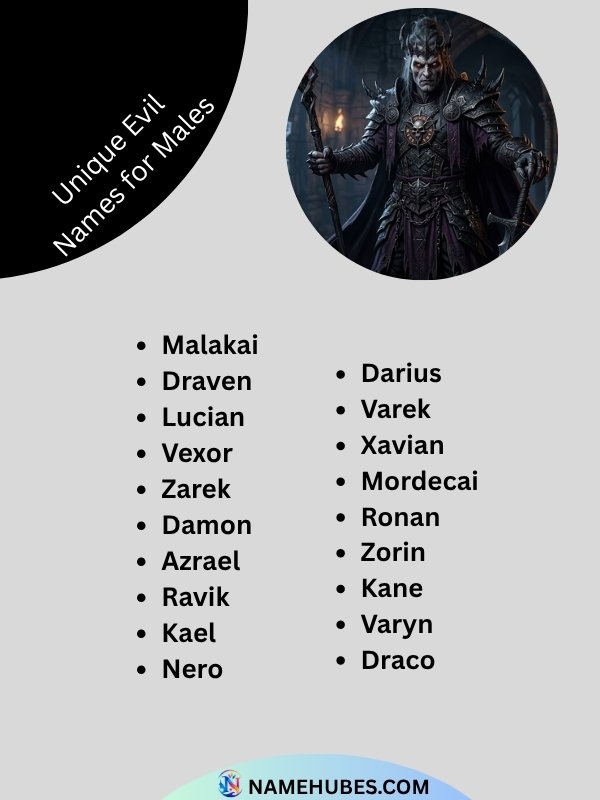
Unique Evil Names Male
- Vornoth
- Drazkiel
- Malgrave
- Thessaric
- Korvain
- Zephraxis
- Baltheron
- Nyxander
- Grimsvale
- Rothgar the Hollow
- Vaskeleth
- Ormundir
- Kaelthrax
- Drevoth
- Sablewick
- Molharic
Also Read : 550+ Spanish Middle Names: Cute, Unique & Traditional Ideas
Powerful Evil Names
- Doomcaster
- Ravenmourn
- Bloodvane
- Shadowreign
- Wrathkin
- Grimhallow
- Cindermaw
- Nightscourge
- Voidbringer
- Painsworn
- Ashborn Tyrant
- Fireweaver
- Malicewright
- Tombcaller
- Vilecrown
- Ruinsmith
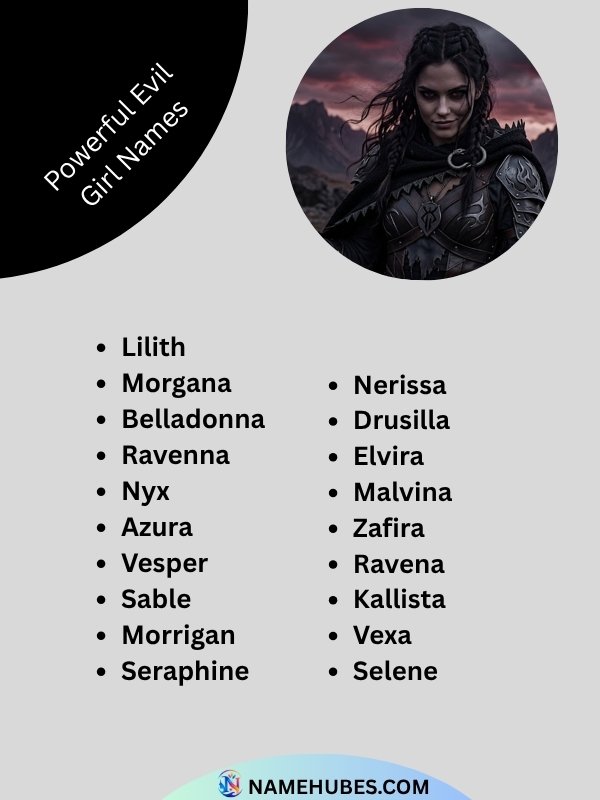
Powerful Evil Girl Names
- Vexoria
- Morrigwyn
- Selvantha
- Nyctessa
- Ravenna Vex
- Thornessa
- Xandrelle
- Grimalda
- Wraithmira
- Corvina Shade
- Mavriel
- Duskarra
- Sorrowyn
- Bexandria
- Malvorra
- Ithreya
Also Read : 300+ Best Cow Names: Cute, Funny & Unique Ideas
Powerful Evil Boy Names
- Draxamir
- Kellthorne
- Vorathan
- Grimsley Black
- Cassivor
- Thane Morrow
- Balrothic
- Ferrowick
- Skarveth
- Oswynder
- Malachar
- Ruvenholt
- Ashkorath
- Torvindal
- Bledrik
- Nashveil
Male Evil Names for Villains and Dark Lords
- Lord Vaskorath
- Thane Dreadmore
- King Ashvael the Cruel
- Morvain Blackspire
- Kaz the Unmaker
- Lord Threxul
- Grendal Voss
- Sire Malacoth
- Duke Ravenholt
- Kryven the Exiled
- Lord Sorrowfen
- Vaelthorn the Bound
- Master Dravik
- Thorne of the Hollow Crown
- Karthigern the Fallen
- Lord Obsidian Vane
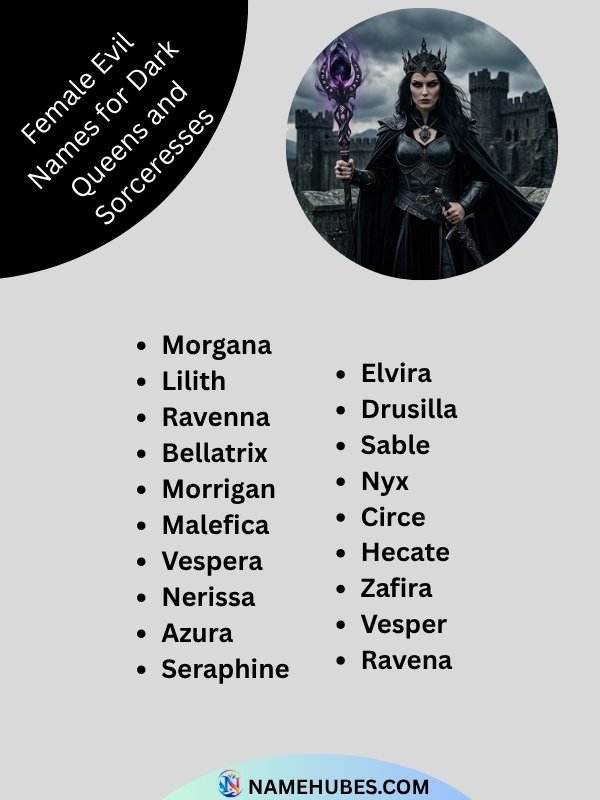
Female Evil Names for Dark Queens and Sorceresses
- Queen Malvira
- Sorceress Thessalen
- Lady Vraxandra
- Morgravia the Pale
- Queen Nytheris
- Ashenna Voss
- Lady Corvessa
- Vexmira the Unbound
- Queen Sablewyn
- Thornqueen Isolde
- Lady Dravenna
- Selkoraine the Cold
- Queen Morthessa
- Vyranthe of the Veil
- Lady Grimwynne
- Nocturra the Withering
Also Read : 350+ Names That Mean Summer: Radiant & Sunny Names for Babies
Genderless Evil Names for Mysterious Antagonists
- Vantheris
- The Hollow One
- Zerashade
- Kirovex
- The Unnamed Sorrow
- Thessivar
- Mordune
- The Grey Tally
- Vasilkorn
- Ondrathel
- The Waning Voice
- Krethis
- Salvorine
- The Ember Between
- Nyxthorn
- Ashevar
Evil Names from Mythology and Religion
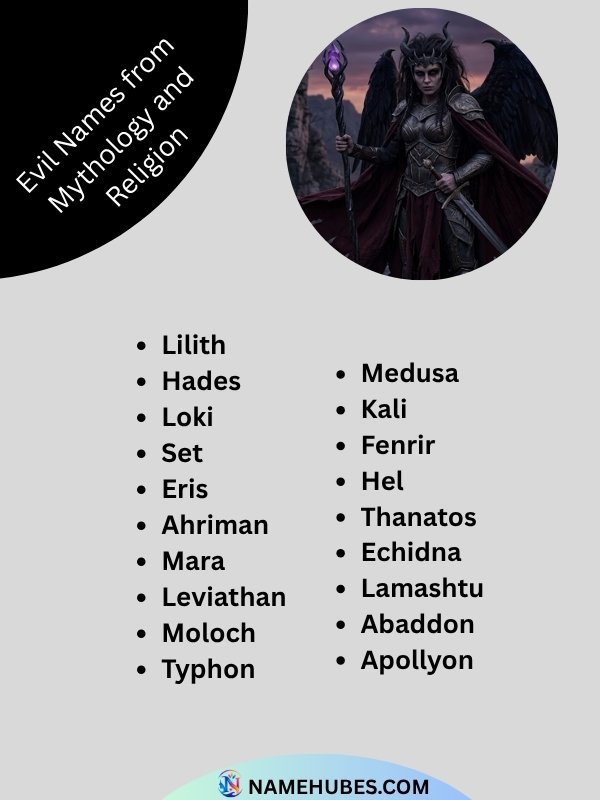
- Abaddon
- Lilith
- Mephistopheles
- Hades
- Loki
- Nyx
- Erebus
- Thanatos
- Fenrir
- Krampus
- Baal
- Hecate
- Azazel
- Set
- Moloch
- Tiamat
Evil Names Inspired by Darkness and Shadow
- Umbrathos
- Shaidenmark
- Duskral
- Noctivane
- Shadowmere Kael
- Tenebrix
- Eclypsara
- Murkendal
- Blackveil Orin
- Nightspire
- Obscurath
- Gloomvara
- Umbrielle
- Duskfang
- Shadewick
- Pallorwyn
Evil Names Inspired by Death and Decay
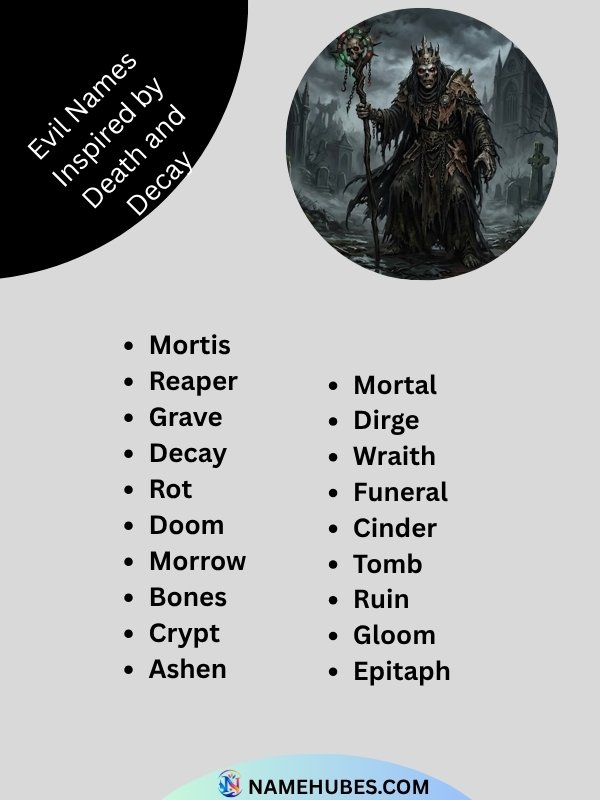
- Morbrath
- Ashryn Grave
- Rotfang
- Decayus
- Mortelis
- Grimhollow
- Cinderbone
- Wraithrot
- Sepulvane
- Deathmire
- Charnelis
- Palegrave
- Necrovane
- Hollowbone
- Tombshade
- Ruinmarch
Evil Names Inspired by Pain and Suffering
- Agonath
- Thornwreath
- Sufferael
- Painscar
- Vexanguish
- Torvain the Mourned
- Grimace Voss
- Anguisara
- Lashwyn
- Miserathis
- Wretchvale
- Sorrowbrand
- Cryosuffer
- Bledsorrow
- Gaunthorn
- Wailmarch
Evil Names Inspired by Venom and Poison
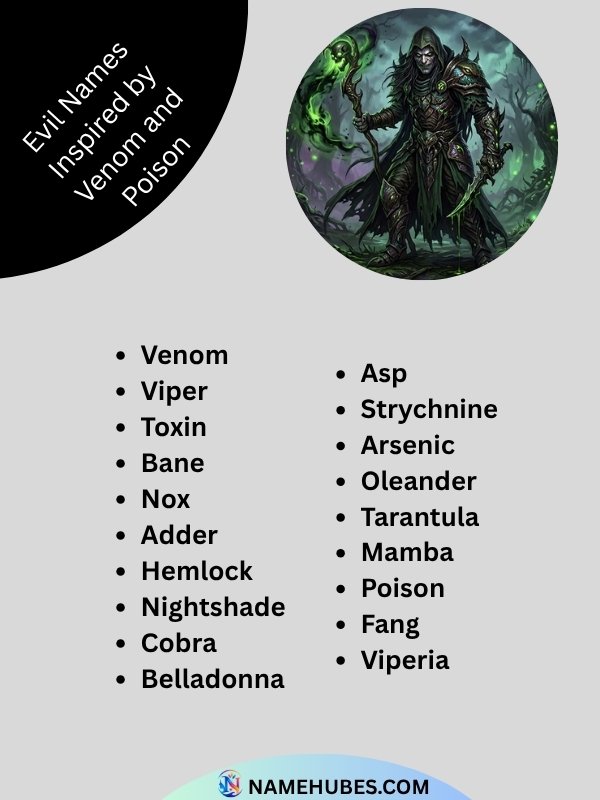
- Venomyx
- Toxavane
- Serpentyl
- Blightfang
- Cordovenin
- Vipressa
- Gallowvenom
- Nightshade Korr
- Toxralis
- Fangvenn
- Bileward
- Vennathis
- Coilspite
- Poxavine
- Serpevane
- Miasmara
Evil Names Inspired by Fire and Destruction
- Emberash
- Infernavor
- Cindraxis
- Pyrewrath
- Blazrath
- Ashkindle
- Scorchveil
- Flamehollow
- Vulcaneth
- Charcindra
- Ravaxis
- Emberfell Korr
- Pyroclast Vane
- Ashenfury
- Wildfyre Korrath
- Ruinflare
Evil Names for Fantasy RPG Characters
- Draknarok
- Vexholm the Cursed
- Skorath Nightblade
- Korthanel
- Thraxumir
- Vaelkrin the Silent
- Grimwarden Oss
- Malrakor
- Dreadstrider Kael
- Thornbane Vek
- Oskrell the Forsaken
- Kaelrath Duskspire
- Vornheist
- Zathmor the Broken
- Ashkarion
- Vyrenthal
Evil Names for Horror Movie Villains
- Mister Hollow
- The Grinning Man
- Corven Blackwell
- The Basement Thing
- Harlan Crowe
- The Quiet Neighbor
- Vesper Thorn
- The Man in the Static
- Elias Vane
- The Hollow Choir
- Delroy Stitch
- The Porchlight Ghost
- Agatha Crell
- The Sleep Thief
- Mordecai Hush
- The Widow’s Grin
Evil Names Inspired by Real Life Serial Killers
Rather than borrowing names from real people, this list leans on the cold, clinical tone that true-crime coverage often uses for unnamed suspects. These fit villains who feel unsettling because they seem almost ordinary.
- The Quiet Tenant
- Subject 14
- The Streetlamp Killer
- Gerald Voss
- The Filing Clerk
- Dennis Ashcombe
- The Night Caller
- Wendell Marsh
- The Fourth Floor Man
- Corliss Bane
- The Umbrella Stranger
- Otis Greave
- The Repeat Offender
- Marlin Crest
- The Substitute
- Alden Fowler
Evil Names Inspired by Dark Colors
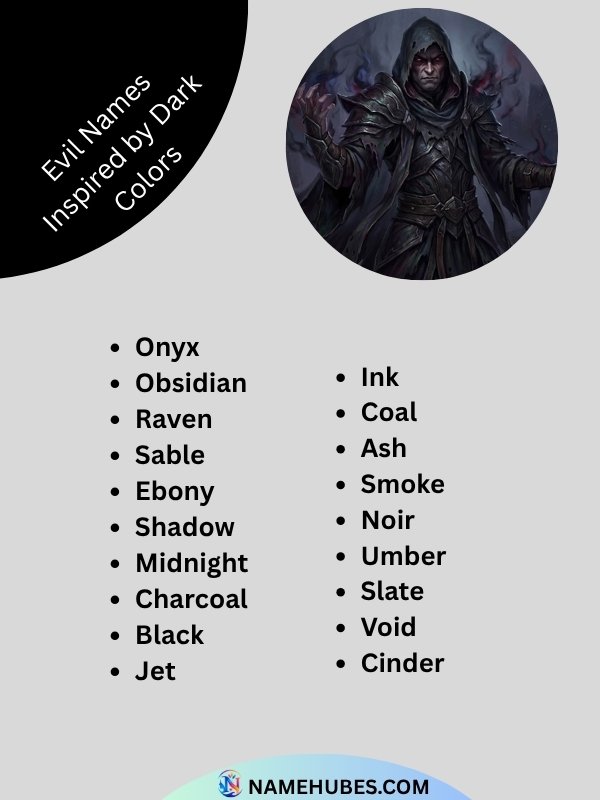
- Onyxa Vane
- Charcoal Vex
- Obsidian Krell
- Raven Ashgrave
- Jetstone
- Sablewyn Ash
- Umberoth
- Pitchveil
- Slatehollow
- Ebonclaw
- Crowblack Ferris
- Tarveil
- Inkspire
- Ashgray Korrin
- Duskonyx
- Coalthorn
How To Choose Evil Names
Start with the character’s role before the sound of the name. A quiet manipulator needs something different from a screaming warlord. Once you know the personality, pick a theme that matches it, like decay for a slow, patient villain or fire for one who acts fast and loud.
Say the name out loud. If it’s hard to pronounce or sounds awkward in dialogue, readers will trip over it every time it shows up. Short, punchy names tend to work better in fast scenes, while longer, layered names suit rulers and ancient beings.
Check that the name doesn’t accidentally sound like an existing famous character. A quick search before you commit saves you from confusion later.
Why Evil Names Matter for Your Villain
A name is often the first thing readers or players learn about a villain, sometimes before they see them do anything evil at all. It sets expectations. A name like “Korvain the Unmaker” tells the audience this character destroys things before a single scene plays out.
Names also help with pacing. A strong villain name gives writers a shorthand they can use in dialogue, headlines, or warnings from other characters, building dread without extra explanation.
What Makes an Evil Name Effective
Effective evil names usually share a few traits. They lean on harsh consonants like K, V, X, and R, which feel sharper than soft sounds. They often carry a hidden meaning tied to fear, control, or ruin, even if the audience never learns the literal translation.
Rhythm matters too. Names with two or three strong syllables tend to stick better than long, clunky ones. And the best villain names usually hint at a role or history, like a title, a lost kingdom, or a broken vow, instead of being a random string of letters.
Mistakes To Avoid When Creating Evil Names
The most common mistake is stacking too many harsh letters together until the name becomes unreadable. A name like “Xkrzathvor” looks intense on paper but is nearly impossible to say out loud.
Another mistake is copying a well-known villain’s name with a small tweak. Readers notice, and it can make original work feel derivative. Writers also sometimes give every villain in a story the same naming pattern, which makes characters blur together instead of standing apart.
Finally, avoid meanings that clash with the character. A gentle, calculating villain doesn’t need a name built entirely from destruction and fire.
Why Your Villain’s Evil Name Matters for Your Story
Beyond first impressions, a villain’s name carries weight through the whole story. It shows up in dialogue, chapter titles, prophecies, and warnings from other characters, so it needs to hold up under repetition without becoming tiresome or hard to remember.
A well-built name can also foreshadow a twist. A villain named after decay might slowly weaken over the story, while one named after fire might burn out fast and hard. The name becomes part of the narrative, not just a label.
Can a Good Evil Name Make Your Character Iconic
A strong name alone won’t carry a weak villain, but it gives a well-written one an edge. Some of the most memorable antagonists in fiction have names that feel inseparable from who they are, carrying tone and threat in just a word or two.
Pairing a distinct name with clear motives, a consistent voice, and a real presence in the story is what pushes a villain from forgettable to iconic. The name is the hook. The writing has to follow through on it.
Tips To Make Your Evil Names Unique
Blend two unrelated dark concepts instead of picking just one, like combining decay with cold, or shadow with silence. This avoids the obvious, overused combinations readers have already seen.
Try shortening longer invented names into nicknames other characters use. It adds realism and gives you two versions of the name to work with. You can also borrow old or unfamiliar language roots and reshape them slightly, which keeps names feeling fresh instead of pulled straight from a name generator.
Read the name next to your other character names. If it clashes in tone or style, adjust it until the whole cast feels like it belongs in the same world.
Frequently Asked Questions
What are some good evil names for a villain?
Names like Vornoth, Malvira, or Doomcaster work well because they combine harsh sounds with a clear dark theme. The best choice depends on whether your villain is a dark lord, a sorceress, or a horror character.
What is a good evil name for a girl?
Strong options include Vexoria, Morrigwyn, and Nyctessa. These names sound powerful without being hard to pronounce, which makes them useful for dialogue-heavy scenes.
What are some scary villain names?
Names built around death, decay, or shadow tend to feel the scariest, such as Rotfang, Umbrathos, or The Hollow Choir. Titles that hint at an unknown threat, like “The Quiet Tenant,” can feel even more unsettling than a full name.
What are good evil names for fantasy characters?
Fantasy villains usually benefit from invented, layered names like Draknarok or Vaelkrin the Silent. These fit worlds similar to Skyrim or Dungeons and Dragons, where names often carry old, mythic-sounding roots.
How do I create an evil name for my character?
Pick a theme tied to your villain’s personality, like fire for aggression or shadow for secrecy, then build a name around harsh consonants and a rhythm that’s easy to say out loud.
Are evil names based on real mythology accurate?
Some evil names, like Hades or Lilith, come from real mythological and religious traditions, so their meanings are rooted in older stories rather than invented. Always treat mythology-based names with some care, since they carry cultural weight beyond fiction.
Conclusion
Finding the right evil names comes down to matching sound, meaning, and personality to the character you’re building. Whether you need a dark lord, a cursed queen, or a quiet horror villain, the goal is a name that feels earned, not just intimidating on the surface.
Use this list as a starting point, then adjust spellings or combine ideas until the name feels like it belongs to your character alone. A villain worth remembering usually starts with a name worth remembering too.
