

Choosing a middle name can feel like an afterthought, but for many families it carries just as much weight as the first name. Spanish middle names in particular tend to connect a child to relatives, faith, or a piece of family history that first names alone can’t always hold. If you’re searching for Spanish baby name ideas that feel warm, meaningful, and a little bit rooted in tradition, this list was built for you.
Below you’ll find hundreds of options grouped by style, so you can find something traditional, modern, rare, or just plain fun. Every name includes context on where it fits and why it works, so picking one feels less overwhelming and more like finding the right fit.
Why Spanish Middle Names Hold Meaning Beyond Tradition
A middle name often does quiet work that a first name can’t. It might honor a grandparent, mark a family’s Spanish heritage, or tie a child to a saint or historical figure without changing how they introduce themselves every day. For many parents, this second name becomes a private thread of identity — something the child can grow into and ask about later.
Spanish naming traditions have long treated middle names as connectors between generations. A name passed down doesn’t just repeat a sound; it repeats a story. That’s part of why so many parents researching Spanish cultural identity names want something that feels personal, not just pretty. The middle name becomes a small act of memory-keeping, whether it points to ancestors, a hometown, or a value the family wants to pass along.
There’s also a practical side. A middle name can soften a first name that feels too trendy, balance a long last name, or give a child a second option if they ever want to go by something else. Spanish names with meaning tend to serve both purposes at once — they sound good and they carry weight.
The Role of Middle Names in Spanish Culture
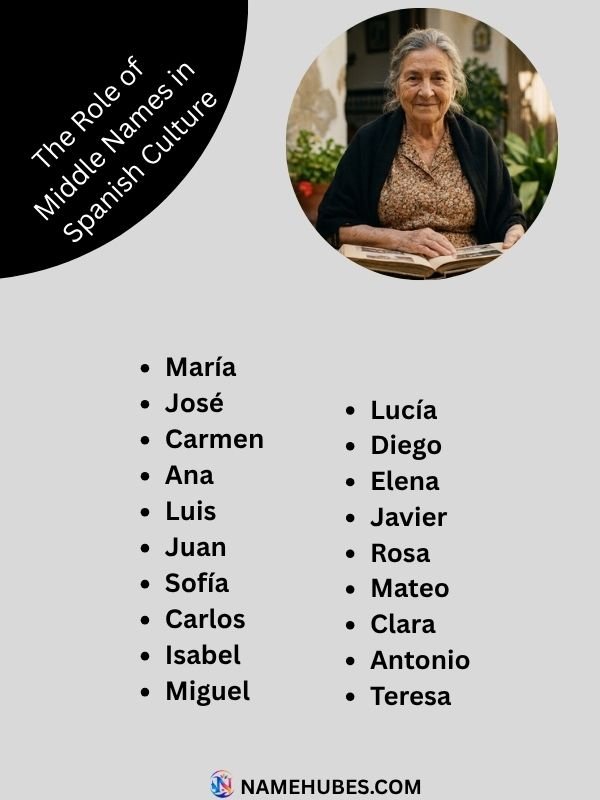
In many Spanish-speaking families, naming a child isn’t just about personal taste. Hispanic naming culture often draws on religious calendars, family patterns, and regional customs that shape which names get passed down and how they’re combined.
It’s common for a middle name to honor a saint tied to the day a child was born, or to repeat a name that’s appeared in the family for several generations. Some families follow a pattern where the first middle name honors the father’s side and a second name (if used) honors the mother’s side. Others simply choose a name that a beloved relative carried, without worrying about strict rules.
This is different from how middle names are often treated in the United States, where they can feel more like a placeholder. In Spanish naming traditions, the middle name frequently does real identity work — it says who a child belongs to and where they come from. Understanding that context can help when blending Spanish culture with an English first name or an American last name, since the middle name is often the piece that keeps the connection visible.
Spanish Middle Names Generator
If you’re stuck between styles, try this simple approach instead of scrolling endlessly:
- Pick a category that matches your goal — traditional if you want family connection, unique if you want something distinctive, or elegant if you want a name that ages well.
- Say the full name out loud. First name, middle name, and last name together should have a natural rhythm, not too many hard stops or repeated sounds.
- Check the syllable count. A short first name often pairs well with a longer middle name, and vice versa.
- Consider meaning last, not first. A name that sounds right and fits your family matters more than a translated meaning that no one will ever look up.
- Test the initials. Spell out the first, middle, and last initials together to make sure they don’t spell something awkward.
Use this process alongside the lists below, and you’ll likely land on two or three finalists rather than feeling stuck with hundreds of options.
Also Read : 350+ Names That Mean Summer: Radiant & Sunny Names for Babies
Traditional Spanish Middle Names
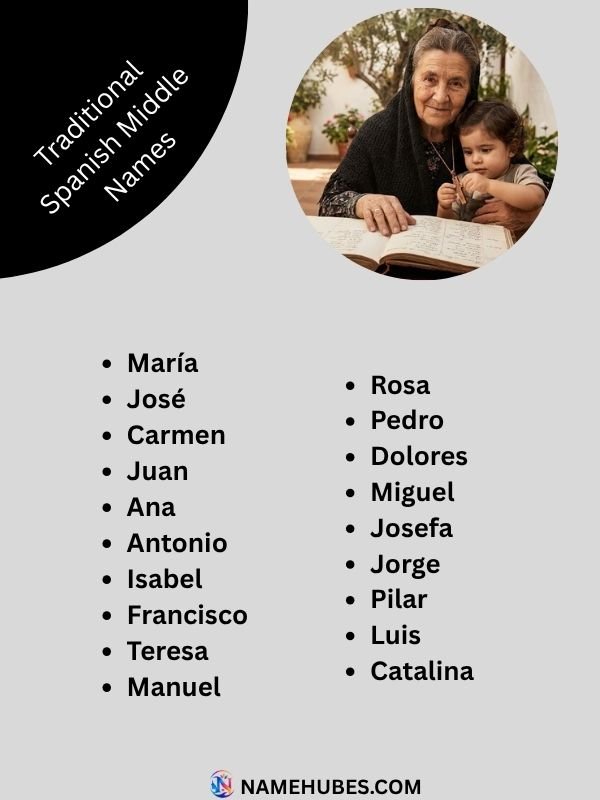
These names have stayed in steady use across generations, often tied to family patterns or religious naming customs.
- José
- María
- Antonio
- Francisco
- Manuel
- Rafael
- Fernando
- Carmen
- Dolores
- Rosario
- Concepción
- Guadalupe
- Teresa
- Isabel
- Consuelo
- Mercedes
- Pilar
- Soledad
- Gregorio
- Ignacio
- Ramón
- Salvador
- Eduardo
- Ricardo
- Vicente
- Lorenzo
- Ambrosio
- Anselmo
- Encarnación
- Asunción
Also Read : 350+ Clan Names: Cool, Funny & Powerful Names for Gaming Teams
Popular Modern Spanish Middle Names
These have grown in popularity over the last decade, showing up often on birth records across the U.S. and Latin America.
- Mateo
- Santiago
- Sebastián
- Emiliano
- Leonardo
- Nicolás
- Diego
- Adrián
- Bruno
- Thiago
- Valentina
- Camila
- Sofía
- Isabella
- Renata
- Ximena
- Regina
- Luciana
- Emilia
- Antonella
- Mariana
- Alessandro
- Maximiliano
- Rodrigo
- Lucía
- Daniela
- Gabriela
- Fernanda
- Carolina
- Andrea
Classic Spanish Middle Names
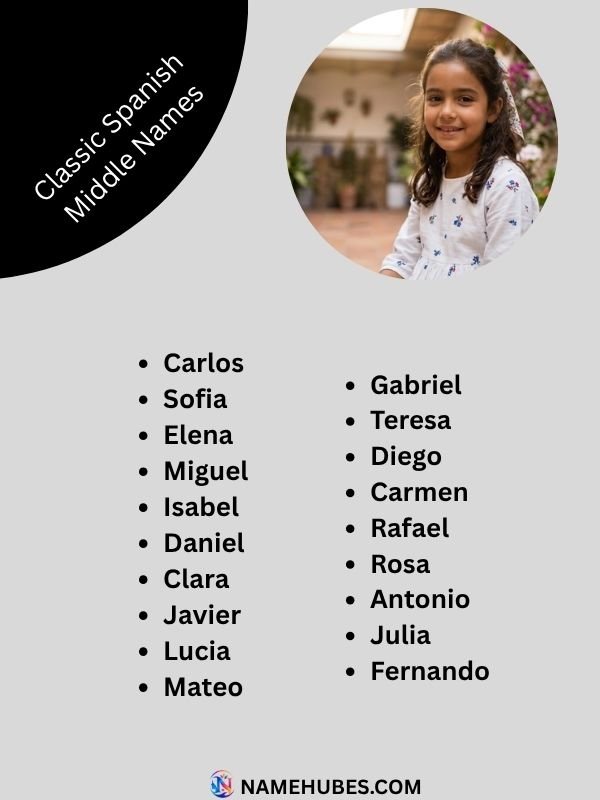
Classic names sit between traditional and modern — familiar, timeless, and rarely tied to a specific trend.
- Alfonso
- Enrique
- Alberto
- Julián
- Roberto
- Ernesto
- Arturo
- César
- Joaquín
- Pablo
- Andrés
- Felipe
- Guillermo
- Miguel
- Raúl
- Elena
- Beatriz
- Victoria
- Adela
- Clara
- Amparo
- Gloria
- Esperanza
- Ángeles
- Remedios
- Inés
- Cecilia
- Leonor
- Nieves
- Rocío
Also Read : 300+ Funny Wizard Names: Hilarious, Magical & Clever Names for Every Wizard
Spanish Middle Names for Boys
A dedicated list for parents specifically shopping for a son’s middle name, separate from the categories above.
- Bautista
- Emilio
- Tomás
- Gael
- Iker
- Marco
- Damián
- Julio
- Octavio
- Renato
- Silvestre
- Cristóbal
- Serafín
- Amado
- Benito
- Casimiro
- Darío
- Evaristo
- Feliciano
- Herminio
- Isidro
- Jacinto
- Leandro
- Modesto
- Nazario
- Osvaldo
- Prudencio
- Quirino
- Rogelio
- Teodoro
Spanish Middle Names for Girls
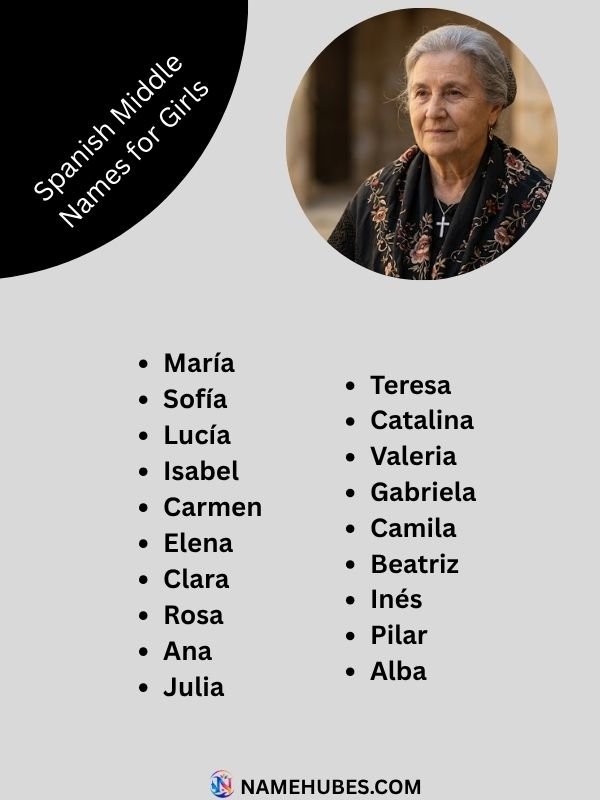
A dedicated list for parents choosing a daughter’s middle name, kept distinct from the categories above.
- Alondra
- Belén
- Catalina
- Dalia
- Estrella
- Flor
- Graciela
- Hortensia
- Jimena
- Karina
- Leticia
- Marisol
- Nadia
- Olivia
- Paloma
- Reyna
- Salomé
- Trinidad
- Úrsula
- Verónica
- Yolanda
- Zaida
- Aurora
- Bibiana
- Celestina
- Delfina
- Eufemia
- Fabiola
- Genoveva
- Herminia
Unique Spanish Middle Names
If you want something that stands apart from typical baby-name lists, these options lean distinctive without being hard to say.
- Azucena
- Belisario
- Crescencio
- Dulcinea
- Eliodoro
- Florentino
- Genara
- Hipólito
- Idalia
- Jerónima
- Leocadia
- Marcelino
- Nemesio
- Onofre
- Petronila
- Quintín
- Romualdo
- Saturnino
- Tiburcio
- Ubaldo
- Valeriano
- Wenceslao
- Xiomara
- Yago
- Zenón
- Abelardo
- Baldomero
- Ceferino
- Deogracias
- Eutiquio
Rare Spanish Middle Names
These names show up far less often today, making them a strong pick for parents who want something almost no one else will have.
- Anacleto
- Bonifacio
- Celedonio
- Domiciano
- Espiridión
- Filomeno
- Gumersindo
- Hermenegildo
- Ildefonso
- Juvenal
- Liborio
- Macario
- Norberto
- Olegario
- Pantaleón
- Quiterio
- Restituto
- Segismundo
- Telesforo
- Urbano
- Venancio
- Zacarías
- Aniceto
- Baltasar
- Casiano
- Deodato
- Eusebio
- Frutos
- Hilario
- Isidoro
Strong Spanish Middle Names
These names carry a bold, powerful sound, often tied to historical rulers, warriors, or figures known for resilience.
- Valentín
- Marcial
- Leonel
- Aquiles
- Maximino
- Fortunato
- Heraclio
- Rómulo
- Constantino
- Fernán
- Alarico
- Rodolfo
- Gonzalo
- Hernando
- Bermudo
- Sancho
- Ordoño
- Favila
- Pelayo
- Recaredo
- Wamba
- Atanasio
- Fructuoso
- Braulio
- Zoilo
- Hermógenes
- Teodosio
- Anastasio
- Crisógono
- Leovigildo
Elegant Spanish Middle Names
Smooth, refined, and easy to picture on a résumé or a wedding invitation — these names age well from childhood into adulthood.
- Aurelia
- Cristina
- Adriana
- Alejandra
- Marcela
- Silvana
- Ariadna
- Diana
- Lorena
- Natalia
- Serena
- Valeria
- Viviana
- Yasmín
- Zoraida
- Amelia
- Blanca
- Constanza
- Dalila
- Edelmira
- Filomena
- Guillermina
- Iluminada
- Jacinta
- Leonarda
- Maravillas
- Octavia
- Palmira
- Rosalinda
- Sabina
Cool Spanish Middle Names
Sharp, modern, and a little edgy — these fit parents who want a middle name with real presence.
- Axel
- Kai
- León
- Dante
- Roque
- Iván
- Yeray
- Kilian
- Ares
- Ulises
- Bastián
- Rayan
- Izan
- Erik
- Aitor
- Unai
- Aimar
- Ander
- Asier
- Markel
- Oier
- Peio
- Xabier
- Endika
- Marcos
- Iago
- Nilo
- Kerman
- Ekaitz
- Toriano
Cute Spanish Middle Names
Soft, sweet, and easy to say — these work especially well for babies and young children.
- Lola
- Nina
- Mia
- Luna
- Vera
- Alba
- Bella
- Rosita
- Anita
- Lulú
- Marisela
- Perlita
- Estrellita
- Ainhoa
- Noa
- Maite
- Lucita
- Amaya
- Nayeli
- Ainara
- Iratxe
- Naia
- Malena
- Mireya
- Zaira
- Nayara
- Amaranta
- Coral
- Perla
- Tita
Funny Spanish Middle Names
These lean into the playful nicknames many Spanish-speaking families already use at home, giving a lighthearted option for parents who don’t want to take the middle name too seriously.
- Pepito
- Chuy
- Beto
- Lalo
- Kiko
- Nando
- Paco
- Pancho
- Chelo
- Concha
- Tito
- Fito
- Nacho
- Chava
- Memo
- Cuco
- Yeyo
- Neto
- Tavo
- Chuchín
- Pipo
- Bebo
- Chepe
- Toto
- Tuti
- Nono
- Kuki
- Momo
- Fefa
- Lele
Religious and Cultural Influence on Spanish Middle Names
Faith plays a major role in how many Spanish middle names came to exist in the first place. For generations, children were named after the saint whose feast day matched their birth date, which is part of why names like Guadalupe, Concepción, and Asunción still show up so often — they trace back to specific religious observances rather than general popularity.
Beyond saints, biblical and historical figures have shaped naming patterns across Spain and Latin America. Names tied to faith often carry an unspoken expectation of protection or guidance, which is one reason some families still choose them even when they aren’t especially religious day to day.
Cultural identity matters here too. For families in the U.S. with Spanish or Latin American roots, choosing a name with religious or historical weight can be a way of keeping that connection visible, even when the first name is more modern or English-sounding. It’s less about following a rule and more about giving a child something to grow into.
Spanish Middle Names With Meanings
Some parents want a middle name that carries a specific meaning they can explain later. Here are options where the meaning is well documented and genuinely fits the sentiment behind the name.
- Amado — beloved
- Clemente — merciful
- Dorotea — gift of God
- Milagros — miracles
- Providencia — providence, divine care
- Angélica — angelic
- Fidel — faithful
- Fortuna — fortune, luck
- Caridad — charity
- Paz — peace
- Luz — light
- Fe — faith
- Gracia — grace
- Amancio — loving
- Benedicta — blessed
These work well when a family wants the middle name to say something specific, rather than simply sound nice next to the first and last name.
How Families Choose Spanish Middle Names
There’s no single right process, but a few patterns come up again and again. Some families work backward from a person — a grandparent, a parent, a sibling who passed away — and choose a name specifically to honor them. Others work forward from a value, picking a name tied to faith, strength, or hope.
Sound also matters more than people expect. Parents often say a full name out loud dozens of times before settling on it, listening for how the syllables land next to the first and last names. Some families also consider how the name will function outside the home — whether teachers, coworkers, or new friends in the U.S. will be able to pronounce it without much explanation, and whether that matters to them.
Finally, many parents balance heritage with individuality. A name might come from one side of the family, but they’ll choose a spelling or pairing that feels personal rather than a repeat of exactly what came before.
Tips for Pairing Spanish Middle Names With First and Last Names
- Balance syllable length. A short first name often pairs better with a longer, more textured middle name, and the reverse works too.
- Avoid repeating sounds. If the first name ends in a vowel and the middle name starts with the same one, the name can run together awkwardly when spoken.
- Say it with the last name. Some combinations look fine on paper but feel clunky out loud — always test the full name together.
- Watch the initials. Spell out all three initials to make sure they don’t accidentally form a word or an odd abbreviation.
- Think about nicknames. If the middle name could become a natural nickname, decide whether that’s something you want.
- Consider both cultures if it applies. If one parent’s background isn’t Spanish, look for a middle name that bridges both sides comfortably rather than feeling like an afterthought.
Common Mistakes to Avoid When Choosing Spanish Middle Names
One frequent mistake is picking a name purely for its meaning without testing how it actually sounds with the rest of the name. A beautiful meaning doesn’t help much if the full name is hard to say or write.
Another is assuming a name will be pronounced the same way in English as it does in Spanish. Some names that flow easily in Spanish get mispronounced constantly in English-speaking settings, which can frustrate a child later on — worth considering, even if it isn’t a dealbreaker.
Parents sometimes also choose a name only because it’s currently popular, without considering how it will feel in twenty or thirty years. A name tied to a specific trend can start to feel dated, while more classic or traditional options tend to hold up better over time.
Finally, some families skip the “say it out loud” step entirely. Reading a name silently and hearing it spoken next to the full name are very different experiences — always test both before deciding.
Frequently Asked Questions
What is a common Spanish middle name?
Names like José, María, Antonio, and Guadalupe remain some of the most common Spanish middle names, largely because of long-standing religious and family naming traditions.
Do Spanish names need two middle names?
No. While some Spanish-speaking countries and families use two middle names or a combination of surnames, it isn’t required. One middle name is completely standard and widely used.
How do I choose a Spanish middle name that matches an English first name?
Focus on rhythm rather than matching origins exactly. Say the full name aloud and choose a Spanish middle name whose syllable count and sound complement the first name, rather than trying to match language origins perfectly.
Are Spanish middle names usually family names?
Often, yes. Many Spanish middle names honor a grandparent, parent, or another relative, though plenty of families also choose a name simply because they love how it sounds or what it means.
Can a Spanish middle name be unisex?
Yes. Names like Guadalupe, Trinidad, and Reyes are used for both boys and girls in many Spanish-speaking families, and several modern names work well as unisex middle name choices too.
What’s the difference between a traditional and a classic Spanish middle name?
Traditional names tend to be tied closely to religious or family customs passed down for generations, while classic names are simply timeless choices that have stayed popular without necessarily carrying the same ceremonial weight.
Conclusion
Picking a Spanish middle name doesn’t have to mean choosing between meaning and sound — the best options usually deliver both. Whether you land on something traditional like Rosario, modern like Camila, or playful like Chuy, what matters most is that it feels right for your family and the story you want your child to carry forward.
Take your time, say the full name out loud a few times, and trust the option that feels like it already belongs.
